AI in Manufacturing ERP: From Production Data to Actionable Business Insights
Modern manufacturing businesses depend on data to manage production, sales, purchasing, quality, inventory and maintenance. Yet having large amounts of data does not automatically mean that a business can make faster decisions.
Employees may still need to search through ERP modules, open reports, compare figures and identify pending activities manually.
AI in manufacturing ERP offers a different approach: allow users to interact with business data using simple questions and receive understandable answers.
Freedom AI, built into Freedom ERP, is designed around this concept. It allows users to ask questions about information already available in the ERP and receive business-oriented responses.
What Does AI Bring to a Manufacturing ERP?
AI can make ERP information easier to access.
Instead of asking an employee to generate a report, a manager can ask questions such as:
- What is our total production this month?
- Which orders are delayed?
- What is our rejection percentage?
- Which suppliers have overdue deliveries?
- Which machines have the highest downtime?
- What quantity is pending against purchase orders?
The objective is not to replace the ERP system. Instead, AI acts as an intelligent layer that helps users understand the information already stored within it.
Turning Manufacturing Data Into Business Questions
Manufacturing ERP systems contain information from numerous processes. Production managers may be interested in machine utilisation and rejection rates, while purchase managers may focus on supplier deliveries and purchase values.
AI can bring these different datasets into a conversational experience.
Freedom AI can provide summaries involving totals, rankings, comparisons, percentages, pending quantities, delayed transactions, performance by period and reasons for rejection or downtime.
This means users can focus their questions on specific business problems instead of spending time figuring out how to retrieve the underlying data.
Production Intelligence
Production is one of the most data-intensive areas of manufacturing.
A manufacturing ERP may contain information about:
- Total production
- Accepted quantity
- Rejected quantity
- Rework
- Rejection percentage
- Rejection reasons
- Machine idle time
- Operator performance
- Production efficiency
- Material usage
- Scrap
- Burn loss
- Nesting efficiency
Freedom AI is designed to analyse these production-related records and answer questions about manufacturing performance.
For example, a production manager could ask:
“What was accepted, rejected and sent for rework?”
The answer can help the manager quickly understand the day’s production outcome and determine whether further investigation is required.
Planning and Capacity Analysis
Production planning requires continuous monitoring.
An overloaded machine can create bottlenecks, while an underutilised machine may indicate unused capacity. Delayed work orders and dispatch commitments can also affect customer deliveries.
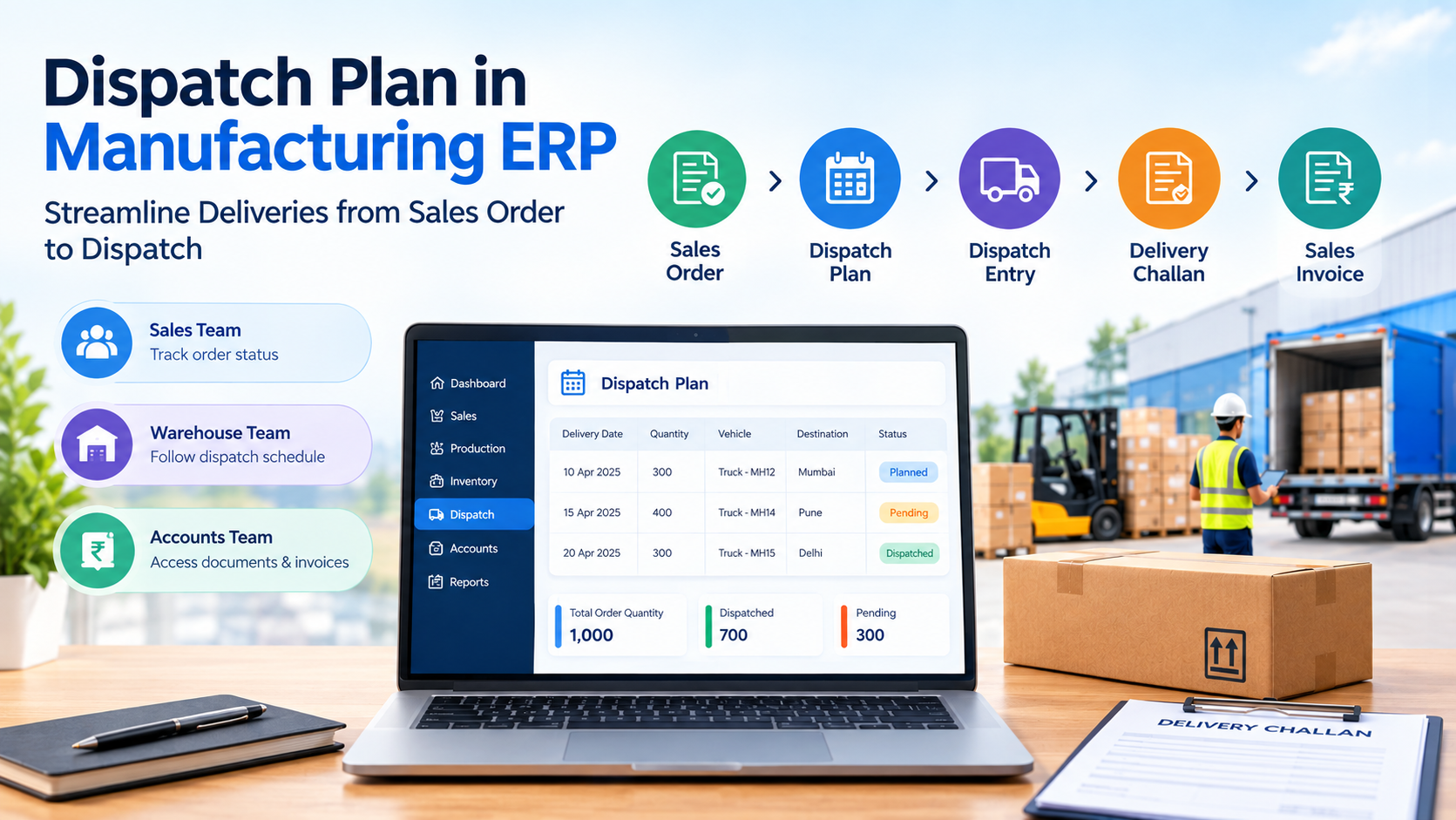
AI-based ERP analysis can help planners review work order status, machine capacity, machine utilisation, dispatch plans, route sheet progress and planned-versus-produced quantities.
This provides planners with a quicker way to identify potential issues.
Quality Data and Root-Cause Visibility
Quality management is another area where AI can improve information accessibility.
Quality-related ERP data may include inspection results, rejected quantities, rework, rejection reasons, calibration status, customer complaints, 8D reports, root causes and corrective actions.
Instead of reviewing multiple reports, a quality manager can ask questions such as:
“What are the major causes of quality rejection?”
The system can then present information from the relevant ERP records in a business-friendly format.
Purchasing and Inventory Insights
Manufacturing performance also depends on having the right materials available at the right time.
AI can help purchasing teams review pending requisitions, supplier quotations, purchase orders, overdue schedules and supplier-wise purchase values.
For stores and inventory, AI can help analyse inward entries, pending inspections, raw material issues, stock movements, scrap receipts, allotments, releases and stock shortfalls.
This gives managers another way to identify material-related bottlenecks.
Maintenance and Machine Performance
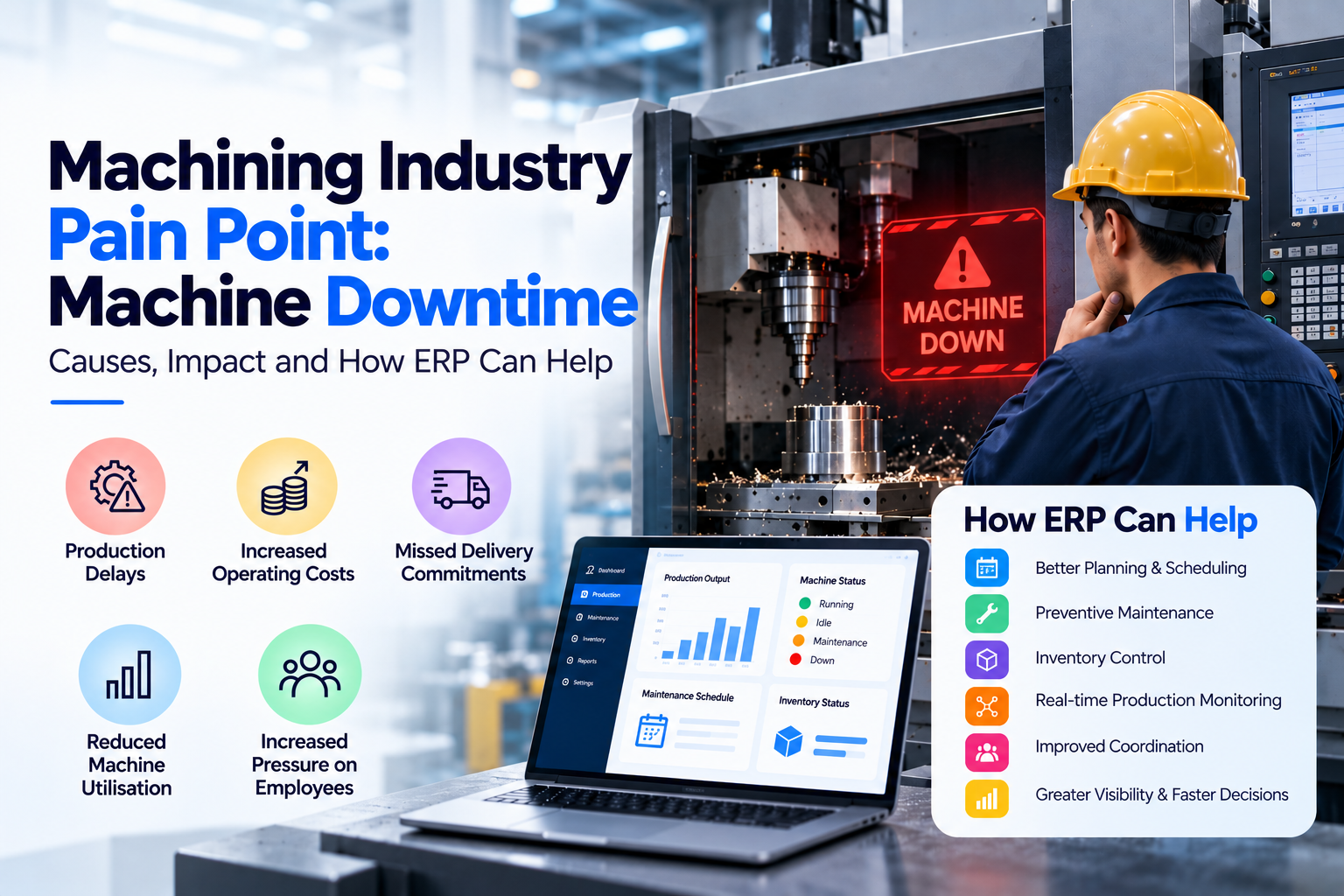
Unexpected machine breakdowns can disrupt production schedules.
An AI-enabled manufacturing ERP can help maintenance teams understand breakdown frequency, downtime, breakdown reasons, preventive maintenance status, spare consumption, tool-service requirements and utility consumption.
A question like “What are the top breakdown reasons?” can help maintenance teams quickly focus on recurring problems.
Tracking an Order From Start to Finish
One of the most useful applications of AI in manufacturing ERP is business traceability.
A single order may involve multiple connected documents and departments. Freedom AI can trace processes such as enquiry to quotation, quotation to sales order, sales order to work order, work order to route sheet, production to inspection and dispatch to invoice.
This makes it possible to determine not only what has happened but also where a process is currently pending.
For example, management can identify whether an order is:
- Completed
- In progress
- Blocked
- Not started
It can also identify missing stages such as a sales order without a work order or a work order without a route sheet.
Why Missing Information Matters
Traditional reporting often focuses on what exists in the system.
AI-based analysis can also help identify what should exist but does not.
Freedom AI is specifically designed to identify missing stages and incomplete business processes, including missing work orders, route sheets, production entries, inspections and purchase inward records.
This can help businesses detect process gaps before they become larger operational problems.
Conversational ERP for Managers
Another important development is conversational interaction.
Users can ask a question and then continue with a follow-up question without starting the analysis again. For example:
“Who are our top five customers this year?”
followed by:
“Show only customers from Tamil Nadu.”
and then:
“Which salesperson handled them?”
Freedom AI is designed to retain recent questions and answers as conversation context.
Voice-based questions further support managers and users who frequently need information while moving between activities.
AI as a Decision-Support Layer
The purpose of AI in manufacturing ERP is not simply automation for its own sake.
Its value comes from helping people understand business information faster.
Freedom AI is positioned as a read-only analytics assistant. It can retrieve, analyse and summarise ERP information but does not delete, cancel, modify or approve business transactions.
This makes the AI functionality focused on analysis and decision support while keeping transactional control within the ERP.
Conclusion
Manufacturing organisations already possess a significant amount of operational data. The next challenge is making that data accessible and useful to decision-makers.
AI in manufacturing ERP can simplify the way managers interact with sales, production, planning, quality, purchasing, stores and maintenance information.
Freedom AI brings these capabilities into a single business assistant, allowing users to ask questions in everyday language, review summaries, identify delays and missing activities, and trace business processes across connected ERP stages.
The result is a more conversational approach to ERP—one where users spend less time searching through reports and more time understanding what their business data is telling them.