ERP for Plastic Injection Molding: Complete Guide to Streamlining Manufacturing Operations
Plastic injection molding is one of the most efficient manufacturing processes used to produce high-quality plastic components for industries such as automotive, healthcare, consumer goods, electronics, packaging, and industrial equipment. However, managing molds, production schedules, inventory, machine utilization, quality control, and customer orders can become increasingly complex as businesses grow. This is where ERP for Plastic Injection Molding plays a crucial role.
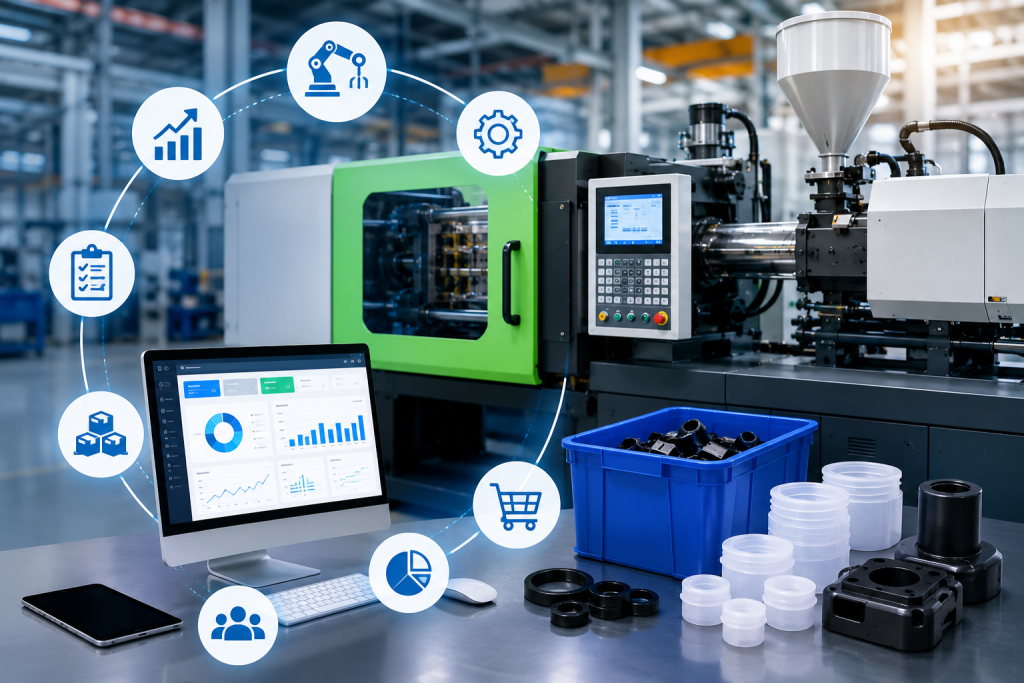
An Enterprise Resource Planning (ERP) system designed specifically for injection molding manufacturers integrates production planning, procurement, inventory, quality management, finance, sales, and reporting into one centralized platform. Instead of relying on disconnected spreadsheets or multiple software applications, manufacturers gain complete visibility into their operations, allowing them to improve productivity, reduce waste, and increase profitability.
This guide explains everything you need to know about ERP solutions for plastic injection molding manufacturers and how they can transform production processes.
What is ERP for Plastic Injection Molding?
ERP for Plastic Injection Molding is specialized manufacturing software developed to manage every aspect of an injection molding business. Unlike standard ERP systems, it includes industry-specific features such as mold management, machine scheduling, production monitoring, material planning, batch traceability, and quality control.
The software connects every department within the organization, ensuring accurate data flows from customer inquiries to production and final delivery. This integration enables faster decision-making and eliminates manual errors.
Why Injection Molding Manufacturers Need ERP
Injection molding companies face several operational challenges, including:
-
Managing hundreds of molds
-
Tracking machine utilization
-
Controlling raw material consumption
-
Reducing production downtime
-
Meeting strict delivery schedules
-
Monitoring product quality
-
Managing inventory efficiently
-
Controlling manufacturing costs
Without a centralized ERP solution, businesses often experience delays, production bottlenecks, inaccurate inventory records, and higher operational expenses.
An ERP system automates these processes and provides real-time visibility across the entire manufacturing lifecycle.
Key Features of ERP for Plastic Injection Molding
Production Planning and Scheduling
Efficient production scheduling is critical in injection molding.
ERP enables manufacturers to:
-
Schedule production orders
-
Allocate machine capacity
-
Assign operators
-
Balance workloads
-
Meet delivery deadlines
Automated scheduling improves productivity while reducing machine idle time.
Mold Management
Molds represent a significant investment for injection molding companies.
ERP helps manage:
-
Mold inventory
-
Maintenance schedules
-
Mold lifecycle
-
Repair history
-
Tool availability
-
Usage tracking
Proper mold management extends tool life and minimizes unexpected production interruptions.
Material Requirement Planning (MRP)
Raw material shortages can halt production.
ERP automatically calculates material requirements based on:
-
Production orders
-
Current inventory
-
Purchase orders
-
Sales forecasts
-
Safety stock levels
This ensures materials are always available when needed while avoiding excess inventory.
Inventory Management
Inventory management becomes much easier with ERP.
Manufacturers can track:
-
Plastic granules
-
Masterbatch
-
Additives
-
Packaging materials
-
Semi-finished goods
-
Finished products
Real-time inventory visibility helps reduce carrying costs while improving production planning.
Shop Floor Monitoring
Modern ERP systems provide real-time monitoring of manufacturing operations.
Managers can instantly view:
-
Machine status
-
Production output
-
Downtime
-
Rejection rates
-
Operator productivity
-
Shift performance
Live dashboards help identify production issues before they become major problems.
Quality Control
Maintaining consistent quality is essential for customer satisfaction.
ERP enables quality tracking through:
-
Incoming material inspection
-
In-process quality checks
-
Final product inspection
-
Defect reporting
-
Corrective action tracking
-
Customer complaint management
This improves product consistency while reducing rework and scrap.
Machine Maintenance
Unexpected machine failures can significantly impact production.
ERP supports preventive maintenance by scheduling:
-
Regular servicing
-
Machine inspections
-
Spare part replacement
-
Maintenance history
-
Downtime analysis
Preventive maintenance increases machine reliability and minimizes costly breakdowns.
Benefits of ERP for Plastic Injection Molding
Improved Production Efficiency
ERP automates production planning and scheduling, allowing manufacturers to maximize machine utilization while reducing idle time.
Reduced Material Waste
By accurately tracking raw material consumption and production losses, ERP helps reduce unnecessary material wastage and improve overall efficiency.
Better Inventory Control
Real-time inventory monitoring prevents both stock shortages and excess inventory, ensuring smoother production operations.
Faster Decision Making
Management dashboards provide instant access to production, sales, inventory, finance, and quality reports, enabling quicker business decisions.
Improved Customer Satisfaction
Accurate production planning helps manufacturers deliver orders on time while maintaining consistent product quality.
Better Cost Control
ERP calculates actual production costs by considering:
-
Material costs
-
Labor expenses
-
Machine operating costs
-
Packaging
-
Utilities
-
Maintenance
Accurate costing improves pricing strategies and profitability.
ERP Modules for Injection Molding Manufacturers
A complete ERP solution generally includes the following modules:
Production Management
-
Work order creation
-
Production scheduling
-
Machine allocation
-
Production monitoring
Inventory Management
-
Raw material tracking
-
Warehouse management
-
Stock transfers
-
Inventory valuation
Procurement
-
Purchase requests
-
Vendor management
-
Purchase orders
-
Supplier performance
Sales Management
-
Customer quotations
-
Sales orders
-
Delivery schedules
-
Invoice generation
Finance and Accounting
-
Accounts payable
-
Accounts receivable
-
General ledger
-
Cost accounting
-
Financial reporting
Quality Management
-
Inspection reports
-
Quality audits
-
Defect analysis
-
Compliance management
Real-Time Reporting and Analytics
One of the biggest advantages of ERP is access to real-time business intelligence.
Manufacturers can generate reports for:
-
Production efficiency
-
Machine utilization
-
Inventory valuation
-
Material consumption
-
Sales performance
-
Customer orders
-
Financial statements
-
Production costs
-
Quality performance
These reports help identify opportunities for continuous improvement.
How ERP Improves Supply Chain Management
Injection molding manufacturers depend on a steady supply of raw materials and timely customer deliveries.
ERP strengthens supply chain management by:
-
Automating purchase planning
-
Tracking supplier performance
-
Managing warehouse operations
-
Forecasting demand
-
Monitoring inventory movement
-
Reducing procurement delays
An optimized supply chain ensures uninterrupted production and improved customer service.
Cloud ERP vs On-Premise ERP
Many manufacturers now prefer cloud-based ERP because it offers several advantages.
Cloud ERP Benefits
-
Lower implementation costs
-
Remote accessibility
-
Automatic software updates
-
Better data security
-
Easy scalability
-
Faster deployment
On-Premise ERP Benefits
-
Greater infrastructure control
-
Custom server configuration
-
Internal data hosting
-
Suitable for organizations with strict compliance requirements
The best choice depends on company size, budget, and long-term business goals.
Industries That Benefit from Injection Molding ERP
ERP solutions support manufacturers serving multiple industries, including:
-
Automotive
-
Medical devices
-
Consumer products
-
Electrical components
-
Packaging
-
Industrial equipment
-
Household products
-
Agriculture
-
Aerospace
-
Electronics
Each industry requires accurate production planning, quality assurance, and complete traceability, making ERP an essential business tool.
Choosing the Right ERP Solution
Before selecting an ERP platform, manufacturers should evaluate:
-
Industry-specific functionality
-
Mold management capabilities
-
Production planning features
-
Customization options
-
Mobile accessibility
-
Cloud support
-
Reporting capabilities
-
User-friendly interface
-
Integration with existing systems
-
Technical support and implementation expertise
A well-designed ERP system should adapt to future business growth without requiring major upgrades.
Future Trends in Plastic Injection Molding ERP
Manufacturing technology continues to evolve, and ERP systems are becoming more intelligent.
Emerging innovations include:
-
Artificial Intelligence (AI)
-
Machine Learning
-
IoT-enabled machine monitoring
-
Predictive maintenance
-
Barcode and RFID integration
-
Digital production dashboards
-
Advanced analytics
-
Cloud computing
-
Mobile ERP applications
-
Smart factory integration
These technologies enable manufacturers to improve operational efficiency while remaining competitive in global markets.
Conclusion
Implementing ERP for Plastic Injection Molding is one of the most effective ways to improve operational efficiency, reduce manufacturing costs, and enhance product quality. By integrating production planning, mold management, inventory control, procurement, quality assurance, finance, and customer management into a single platform, manufacturers gain complete visibility over every stage of the production process.
As customer expectations continue to rise and manufacturing becomes increasingly competitive, investing in an industry-specific ERP solution helps businesses streamline operations, improve delivery performance, and make data-driven decisions. Whether you operate a small molding facility or a large-scale manufacturing plant, the right ERP system provides the foundation for sustainable growth, increased profitability, and long-term success.