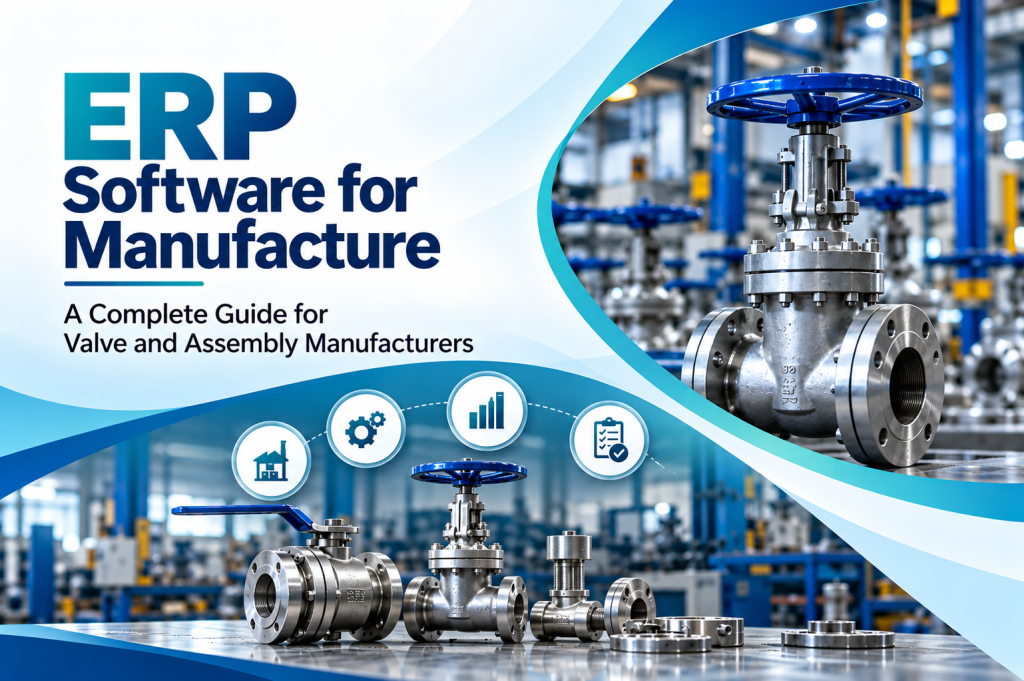
Introduction: Why Valve Manufacturers Need ERP Software
Valve and assembly manufacturing is a complex process. Manufacturers must manage different materials, product designs, production schedules, quality checks, supplier deliveries, and customer requirements. Even a small mistake in material selection or production planning can result in delays, extra costs, and customer complaints.
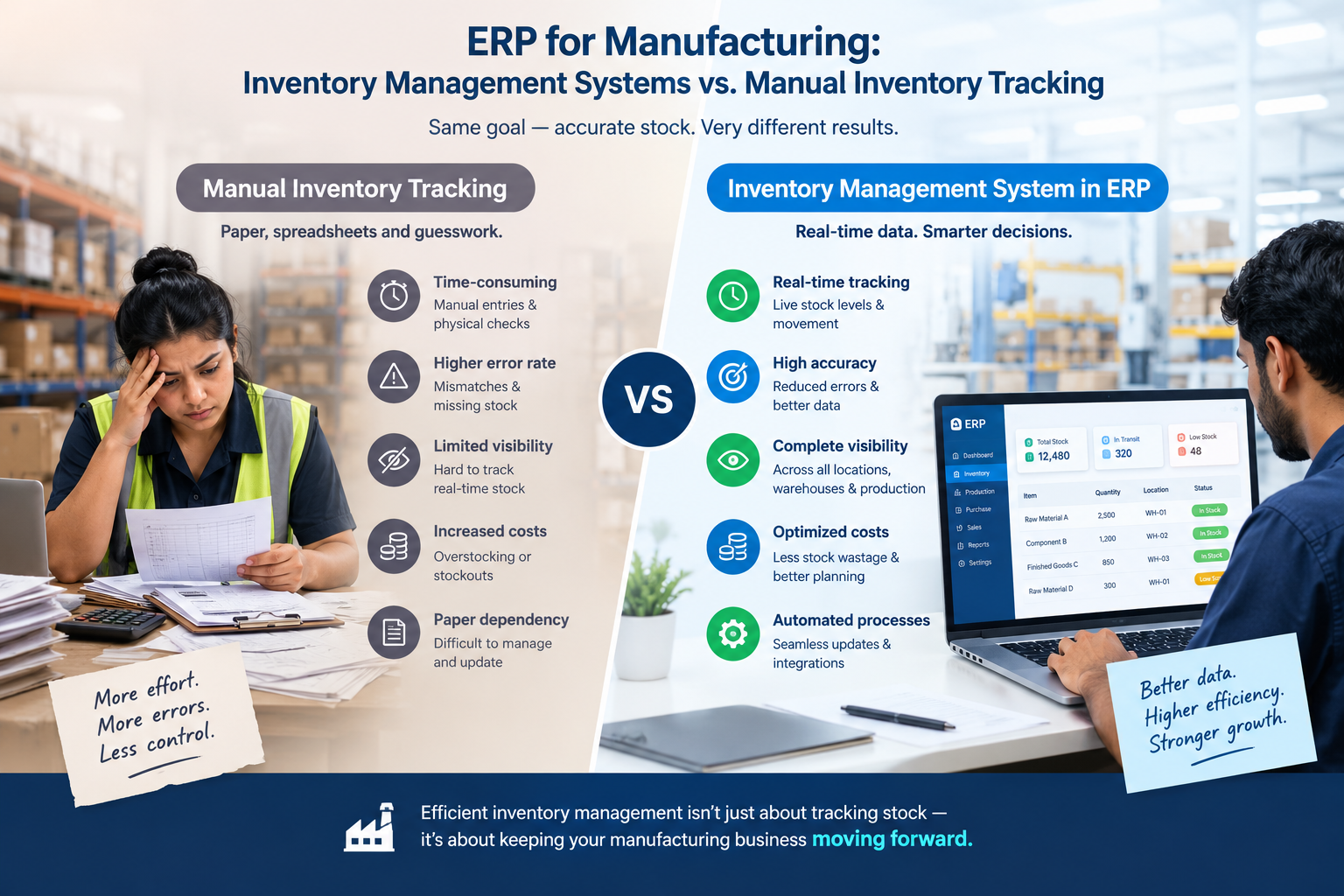
Many valve manufacturers still depend on spreadsheets, paper documents, and separate software systems to manage their daily operations. While these methods may work for a small number of orders, they become difficult to manage as the business grows. Important information may be missed, stock records may be incorrect, and production teams may struggle to get accurate updates.
This is where ERP software for manufacture becomes important. A manufacturing ERP system connects different departments through one integrated platform. It helps manufacturers manage inventory, purchasing, production, quality, sales, and accounts using shared business information.
For valve and assembly manufacturers, ERP software offers more than basic business management. It supports complex Bills of Materials (BOMs), heat-number traceability, serial-number tracking, pressure-test records, material costing, and production scheduling.
Freedom ERP helps manufacturing businesses connect their operations, improve visibility, and make better decisions using real-time information.
In this guide, we will explore the common challenges faced by valve manufacturers and explain how ERP software for manufacture can help improve productivity, quality, cost control, and customer satisfaction.
1. What Is ERP Software for Manufacture?
ERP stands for Enterprise Resource Planning. It is a business management system that connects different departments and processes within a company.
ERP software for manufacture is designed to help manufacturing businesses manage their complete production and business operations in one place.
Instead of maintaining separate records for sales, inventory, purchasing, production, quality, and accounts, manufacturers can use an integrated ERP system to access connected information.
For example, when a customer places an order for a specific valve, the sales team can enter the order into the ERP system. The production team can review the required materials and manufacturing schedule. The purchase team can identify shortages, while the stores team can check stock availability. The accounts team can manage invoices and payments through connected business processes.
This reduces repeated data entry and improves communication between departments.
Key Functions of Manufacturing ERP Software
Manufacturing ERP software can support:
- Sales and customer relationship management
- Purchase and supplier management
- Inventory and stores management
- Production planning and scheduling
- Bill of Materials management
- Quality inspection and testing
- Batch and serial-number traceability
- Machine maintenance
- Job costing and pricing
- Accounts and financial management
- Management reports and dashboards
For valve manufacturers, these functions help control the complete process, from customer enquiry and material purchasing to production, testing, and final dispatch.
Choosing the right ERP software for manufacture helps businesses replace disconnected processes with a more organised and reliable workflow.
2. Why Valve and Assembly Manufacturers Face Unique Challenges
Valve manufacturing involves several operations, including casting, forging, machining, assembly, inspection, testing, and packaging. Each stage requires accurate information and careful coordination.
Manufacturers may produce different valve types, sizes, pressure classes, materials, and configurations. Each product may have different components, drawings, testing requirements, and customer specifications.
Managing these variations manually can create operational difficulties.
Complex Product Configurations
A single valve design may have multiple variations based on size, pressure rating, material grade, trim, end connection, and actuator type.
Each variation may require a different material list and production process. Without proper item coding and BOM management, manufacturers may create duplicate part numbers or use outdated product specifications.
ERP software for valve manufacturing helps organise product information and manage different configurations through controlled item masters and multi-level Bills of Materials.
Material Traceability Requirements
Valve manufacturers often work with carbon steel, stainless steel, duplex steel, alloy steel, bronze, and other specialised materials.
Each material may require specific certificates and inspection records. Manufacturers must know where the material came from, which heat number it belongs to, and where it was used.
An ERP system with batch and heat-number tracking helps maintain this information throughout the manufacturing process.
Pressure Testing and Quality Control
Valves may require shell tests, seat tests, leak tests, and other inspections before dispatch. Test results must be recorded accurately and connected to the correct valve, batch, or serial number.
Managing these records through paper documents can make it difficult to retrieve information during customer audits or warranty investigations.
Manufacturing ERP software helps connect inspection results, test certificates, and production records to the relevant order or product.
These challenges make ERP software for manufacture a valuable investment for manufacturers that need better operational control.
3. The Problems of Managing Manufacturing Operations with Spreadsheets
Spreadsheets are useful for simple calculations and basic records. However, depending entirely on spreadsheets to manage a growing manufacturing business can create several problems.
Incorrect Inventory Information
When stock movements are not updated immediately, the system may show materials as available even when they have already been issued to production.
This can delay work orders, create unnecessary purchases, and affect delivery schedules.
Manufacturing inventory management software helps maintain more accurate stock information by connecting receipts, issues, transfers, and production consumption.
Outdated Bills of Materials
Manufacturers frequently update product designs, component specifications, and engineering drawings. If production teams use outdated BOMs, they may issue the wrong materials or manufacture products according to old specifications.
ERP software helps maintain controlled BOM versions and connect approved product structures to production orders.
Poor Production Visibility
Without a connected system, managers may not know whether a job is waiting for materials, undergoing machining, moving through assembly, or awaiting testing.
Production planning software provides clearer visibility into work orders and production stages, helping managers identify delays earlier.
Unclear Product Costing
Material prices change regularly. Labour, machining, overhead, subcontracting, and rejection costs can also affect the final manufacturing cost.
When quotations are based on outdated prices, manufacturers may underestimate costs and reduce their profit margins.
ERP software for manufacture helps connect material costs, production expenses, and job-level information to improve costing accuracy.
Slow Reporting and Decision-Making
When different departments maintain separate records, preparing reports requires time-consuming data collection and manual calculations.
An integrated ERP system provides connected business information, helping management review production, stock, sales, and financial performance more efficiently.
Replacing disconnected spreadsheets with manufacturing ERP software can help manufacturers improve consistency, visibility, and control.
4. How ERP Software for Manufacture Improves Inventory and Traceability
Inventory management is one of the most important functions in valve manufacturing.
Manufacturers need to maintain the right quantity of raw materials, bought-out components, seals, fasteners, finished goods, and spare parts. They must also ensure that each material meets the required specifications.
Poor inventory management can cause stock shortages, excess purchases, production delays, and material wastage.
Heat-Number and Batch Tracking
Heat-number traceability connects raw materials to their certificates, inspection results, and subsequent production usage.
With appropriate ERP functionality, manufacturers can record heat numbers when materials are received and maintain their traceability as materials move through stores and production.
This makes it easier to identify which material was used in a particular valve or production batch.
Better Stock Visibility
ERP software provides a central view of inventory records, including available stock, allocated materials, pending receipts, and material requirements.
Purchase teams can use this information to identify shortages before they affect production.
Material Grade Control
Different material grades may look similar but have different specifications and applications.
A well-configured ERP system can help manufacturers organise stock by material grade, specification, location, and batch. Where supported, inspection and Positive Material Identification (PMI) results can also be linked to material records.
This improves control over material selection and helps reduce the risk of incorrect material issues.
Shelf-Life Management
Seals, O-rings, elastomers, and packing materials may have storage-life requirements.
Batch and expiry-date tracking, together with appropriate issue rules, can help ensure that expired materials are not issued for assembly.
By improving inventory accuracy and traceability, ERP software for manufacture helps valve manufacturers reduce avoidable errors and maintain better control over material usage.
5. Production Planning and Scheduling with Manufacturing ERP Software
Production planning is challenging when manufacturers handle multiple orders, product variants, machine capacities, and delivery deadlines.
Without proper planning, one job may wait for materials while another occupies a machine that is needed for an urgent order. Assembly may also stop because one required component is missing.
Manufacturing ERP software helps connect production requirements with inventory, purchasing, and work orders.
Multi-Level Bill of Materials
A Bill of Materials lists the components, raw materials, and quantities required to manufacture a product.
Valve manufacturers may need multi-level BOMs covering valve bodies, bonnets, stems, discs, seats, seals, fasteners, and other components.
ERP software helps organise these structures and maintain approved versions for different product configurations.
Work Order Management
Work orders provide information about what needs to be manufactured, the required quantities, and the planned production activities.
An ERP system can help track each work order through stages such as machining, heat treatment, assembly, inspection, and testing.
This allows managers to identify pending operations and review job progress.
Material Requirements Planning
Material Requirements Planning (MRP) helps calculate material requirements based on demand, BOMs, existing stock, and planned receipts.
This helps purchase teams identify which materials need to be ordered and when they may be required.
Capacity Planning
Manufacturers must consider machine availability, labour capacity, subcontracting, and production priorities.
When the ERP system supports capacity planning, managers can make better-informed scheduling decisions and identify potential bottlenecks.
With improved production planning, ERP software for manufacture helps reduce material shortages, improve workflow coordination, and support more reliable delivery commitments.
6. Improve Manufacturing Quality and Compliance
Quality is essential in valve manufacturing because products may be used in oil and gas, power generation, chemical processing, water systems, and other demanding applications.
A defective component or missing test record can lead to rework, rejection, customer dissatisfaction, or delayed dispatch.
Quality management should therefore be part of the manufacturing process rather than a separate activity performed only at the end.
Incoming Material Inspection
Raw materials and castings may require dimensional checks, certificate verification, and non-destructive testing, depending on the product and customer specification.
ERP software can help record inspection results and acceptance status against the relevant material or batch.
This supports better control before materials are released to production.
In-Process Quality Checks
During machining and assembly, manufacturers may need to perform dimensional inspections, process checks, and other quality activities.
An ERP system with suitable quality management functionality helps record results against work orders, operations, or production batches.
When a problem is identified, teams can investigate the affected material or production stage.
Pressure-Test Records
Valve manufacturers may need to record shell, seat, and leak-test results according to applicable product specifications and customer requirements.
ERP software can help connect test records to the correct serial number, batch, or order, depending on the system configuration.
This makes it easier to retrieve historical test information.
Certificates and Audit Documentation
Manufacturers may need material test certificates, inspection reports, calibration records, and other documents for customers or third-party inspections.
Centralised document management helps teams find the relevant records more quickly.
However, ERP software alone does not guarantee compliance. Manufacturers must configure the system according to the applicable standards, customer specifications, approved procedures, and certification requirements.
With structured quality records and controlled workflows, manufacturing ERP software helps improve accountability and audit readiness.
7. Accurate Costing and Better Pricing Decisions
Profitability depends on understanding the actual cost of manufacturing each product or completing each customer order.
Valve manufacturers may face fluctuating prices for alloy steel, stainless steel, nickel-based materials, bronze, and other components. Labour costs, machining time, energy consumption, subcontracting, scrap, and rework can also affect margins.
If quotations are prepared using outdated material prices, the final cost may be higher than expected.
Product Cost Calculation
A manufacturing ERP system can help combine different cost elements, such as:
- Raw material and component costs
- Direct labour
- Machine and production costs
- Subcontracting expenses
- Manufacturing overheads
- Scrap and rework costs
The level of costing detail depends on the ERP system and how the business configures its processes.
Better Quotation Management
Sales teams need current information when preparing quotations. An integrated system can help connect quotations with product specifications, material requirements, and available costing information.
This reduces dependence on old spreadsheets and manually maintained price lists.
Estimated Versus Actual Cost
Comparing estimated costs with actual production costs helps manufacturers identify differences between planned and completed jobs.
For example, a job may exceed its budget because of material price changes, additional machining time, or unexpected rejection.
Cost variance reports help management investigate these differences and improve future pricing decisions.
Improved Profitability Analysis
Manufacturers can review costs and margins by product, order, customer, or job when the ERP system supports these reports.
This helps businesses identify products that require pricing adjustments or process improvements.
By improving cost visibility, ERP software for manufacture supports more informed commercial decisions and better financial control.
8. Purchase Management and Supplier Performance
Valve manufacturers depend on suppliers for castings, forgings, raw materials, seals, fasteners, actuators, and outsourced processes.
A delayed delivery can affect several production activities and put customer commitments at risk.
Manual purchasing processes make it difficult to identify shortages early and monitor supplier performance consistently.
Purchase Planning
ERP software can connect material requirements with stock availability and pending purchase orders.
When a shortage is identified, the purchase team can review the requirement and initiate the appropriate procurement process.
Purchase Order Tracking
A central purchasing system helps teams monitor purchase orders, expected delivery dates, received quantities, and pending supplies.
This improves communication between purchasing, stores, and production.
Supplier Quality Records
Manufacturers can maintain supplier-related information such as delivery history, inspection results, rejection records, and other performance indicators when the ERP system supports these features.
These records help purchasing teams evaluate supplier reliability.
Outsourced Process Tracking
Some valve components require heat treatment, plating, coating, or subcontract machining.
ERP software can help track quantities sent to external vendors, quantities received, pending work, and related costs.
This improves visibility over materials that leave the factory for processing.
A connected purchasing process helps manufacturers reduce avoidable delays and coordinate material availability with production requirements.
9. Serial-Number Tracking and After-Sales Service
Manufacturing control should continue even after a valve is dispatched to the customer.
Customers may request replacement parts, maintenance support, test certificates, or warranty investigations. Manufacturers need accurate records to respond quickly.
Individual Valve History
Some products require serial-number tracking at the individual-unit level.
Where supported, an ERP system can connect the serial number with material batches, manufacturing operations, inspection results, test records, and dispatch details.
This creates a more complete product history.
Faster Warranty Investigations
If a customer reports a problem, the service team can use available product records to identify the affected valve and review its manufacturing history.
This helps the team investigate the issue using recorded information rather than relying entirely on paper documents or staff memory.
Spare Parts Management
Manufacturers may need to supply replacement seals, stems, seats, actuators, and other components.
An integrated ERP system helps connect service requests with product information, stock availability, quotations, and order processing.
Better Customer Communication
When sales and service teams have access to relevant order and product records, they can provide more accurate updates to customers.
For valve manufacturers supplying industrial customers, this level of traceability and service support can help strengthen long-term relationships.
10. How ERP Software for Manufacture Improves Management Visibility
Business owners and production managers need reliable information to understand how the factory is performing.
If every department prepares its own report, management may receive different figures for inventory, production progress, sales, and costs.
ERP software connects business transactions and helps provide a more consistent view of operations.
Real-Time Operational Information
Depending on the system and configuration, dashboards can display information about:
- Open sales orders
- Pending purchase orders
- Material shortages
- Work-in-progress
- Production completion
- Inspection and testing status
- Inventory levels
- Outstanding receivables
- Job costs and profitability
These reports help managers identify problems and prioritise corrective action.
Better Decision-Making
For example, if several production orders are delayed because of the same component shortage, management can review purchasing and supplier performance.
If actual costs repeatedly exceed estimates, managers can investigate material prices, machine utilisation, scrap, and labour requirements.
If quality rejections increase, the business can review the affected materials, suppliers, and production processes.
By bringing information together, manufacturing ERP software helps managers move from reactive problem-solving towards more informed planning.
11. How to Choose the Right ERP Software for Valve Manufacturing
Not every ERP system is suitable for every manufacturing business. Valve manufacturers should evaluate software based on their product complexity, industry requirements, operational processes, and future plans.
Before selecting an ERP solution, consider the following factors.
1. Industry-Specific Functionality
Look for ERP software that supports your manufacturing processes, including machining, assembly, testing, purchasing, and inventory control.
If your products require complex configurations, check whether the system supports multi-level BOMs and controlled product revisions.
2. Material Traceability
Confirm whether the ERP system supports the level of traceability your products require.
Ask about heat numbers, batch numbers, serial numbers, material certificates, and links between raw materials and finished products.
3. Production Planning
Evaluate how the software manages work orders, production stages, material requirements, capacity, and scheduling.
The system should support your actual manufacturing workflow rather than forcing your team to depend on disconnected records.
4. Quality Management
Check whether the ERP system can record incoming inspection, in-process quality checks, pressure-test results, non-conformance records, and relevant certificates.
Verify that it can support the documentation and approval processes required by your customers.
5. Costing and Financial Integration
Choose a system that helps connect material consumption, labour, production expenses, purchasing, sales, and accounts.
Ask how the software calculates product costs and compares estimated costs with actual expenses.
6. Ease of Use
A manufacturing ERP system must be practical for the people who use it every day.
Production staff, stores teams, purchase executives, quality inspectors, and accountants should be able to access the information relevant to their roles.
7. Implementation and Support
Ask about implementation timelines, data migration, user training, customisation, ongoing support, and future upgrades.
A successful ERP implementation requires clear business processes, management involvement, accurate data, and user adoption.
The right ERP software for manufacture should help solve current business problems while supporting future growth.
12. Why Choose Freedom ERP for Manufacturing?
Freedom Software Solutions provides ERP solutions designed around the operational needs of manufacturing businesses.
Valve and assembly manufacturers need a system that connects departments and helps them manage production, materials, quality, costing, and delivery without depending entirely on spreadsheets and manual follow-ups.
Freedom ERP brings key business functions together in one integrated system, supporting better coordination between sales, purchase, stores, production, quality, accounts, and management.
Connected Manufacturing Operations
When departments work with connected information, teams can coordinate activities more effectively.
Sales can review order information, purchasing can respond to material requirements, stores can manage inventory transactions, and production can monitor work orders.
Better Inventory Control
Structured inventory records help manufacturers review stock availability, material movements, and purchasing requirements.
Where configured, batch and heat-number tracking can also support material traceability.
Improved Production Coordination
Production teams need accurate BOMs, clear work orders, and visibility into pending activities.
Freedom ERP can help connect production processes with material and order information, making it easier to monitor operations.
Quality and Documentation Support
Manufacturers can use suitable ERP functionality to organise inspection records, production information, and relevant documentation.
The specific quality, traceability, and certificate workflows should be confirmed during product evaluation to ensure they meet the company’s requirements.
Better Cost and Business Visibility
Connecting operational transactions with costing and accounts helps management understand business performance.
Reports and dashboards can support decisions about stock, production, purchasing, sales, and financial operations.
For manufacturers looking for ERP software for manufacture, Freedom ERP offers an integrated approach to managing the business processes that support daily factory operations.
Visit the official website to learn more: https://www.freedomsoft.co.in/
13. Common Mistakes to Avoid When Implementing Manufacturing ERP Software
Selecting ERP software is only one part of the process. Manufacturers must also prepare their teams and business data for implementation.
Avoiding common mistakes can improve adoption and help businesses achieve better results.
Ignoring Existing Process Problems
Implementing software without reviewing current processes may simply transfer old problems into a new system.
Before implementation, identify the causes of material shortages, production delays, repeated data entry, and reporting errors.
Using Inaccurate Data
Incorrect item codes, duplicate product records, outdated BOMs, and inaccurate opening stock can affect ERP results.
Clean and validate important business data before migration.
Not Involving Employees
ERP software affects several departments. If users are not involved in the implementation, they may struggle to understand new workflows or continue using unofficial spreadsheets.
Provide training and explain how the system supports their daily responsibilities.
Expecting Immediate Results
ERP implementation requires planning, testing, configuration, and continuous improvement.
Set realistic goals and monitor progress using measurable indicators, such as inventory accuracy, order completion, production delays, and cost variance.
Choosing Software Based Only on Price
The lowest-priced system may not provide the functionality required for complex manufacturing operations.
Evaluate the total cost, implementation effort, support, usability, integration requirements, and long-term business value.
A well-planned implementation helps manufacturers get more value from their ERP investment.
14. The Future of Manufacturing with Integrated ERP Systems
Manufacturing businesses are increasingly looking for ways to improve productivity, reduce waste, and make faster decisions.
Connected business systems provide the foundation for better operational visibility. When production, inventory, quality, and financial information are available in one system, businesses can identify patterns and investigate problems more effectively.
Advanced analytics can help managers understand material consumption, production performance, supplier delays, and cost variations.
Depending on the software capabilities and available data, manufacturers may also explore automation, predictive maintenance, and AI-assisted analysis.
However, these capabilities depend on suitable data quality, system configuration, and the specific features available in the ERP solution.
For valve manufacturers, digital transformation does not need to begin with complicated technology. It can start by replacing disconnected records with a reliable, integrated process for managing materials, production, quality, and orders.
ERP software for manufacture helps create this foundation and supports continuous improvement as the business grows.
Conclusion: Take Control of Your Manufacturing Operations with Freedom ERP
Valve and assembly manufacturers face challenges that require more than basic inventory or accounting software. They need better control over product variants, material traceability, production scheduling, pressure testing, supplier deliveries, job costing, and customer documentation.
Managing these activities through spreadsheets and disconnected systems can make it difficult to maintain accurate information and respond quickly to problems.
ERP software for manufacture helps bring these processes together in one connected system. It supports better coordination between departments, improves visibility into production, and helps manufacturers make more informed business decisions.
From managing multi-level BOMs and heat-number tracking to monitoring work orders and reviewing actual production costs, manufacturing ERP software can help reduce avoidable errors and strengthen operational control.
Freedom ERP connects key manufacturing and business functions, helping manufacturers manage their daily operations through an integrated platform.
If your factory is still chasing spreadsheets, manually tracking materials, or struggling to understand production delays, it may be time to consider a more connected approach.
Stop chasing spreadsheets. Start shipping valves.
Discover how Freedom ERP can support your manufacturing business.
Visit: https://www.freedomsoft.co.in/
Contact: sales@freedomsoft.co.in