ERP for Manufacturing Industry: Complete Guide to Improving Efficiency, Productivity, and Growth
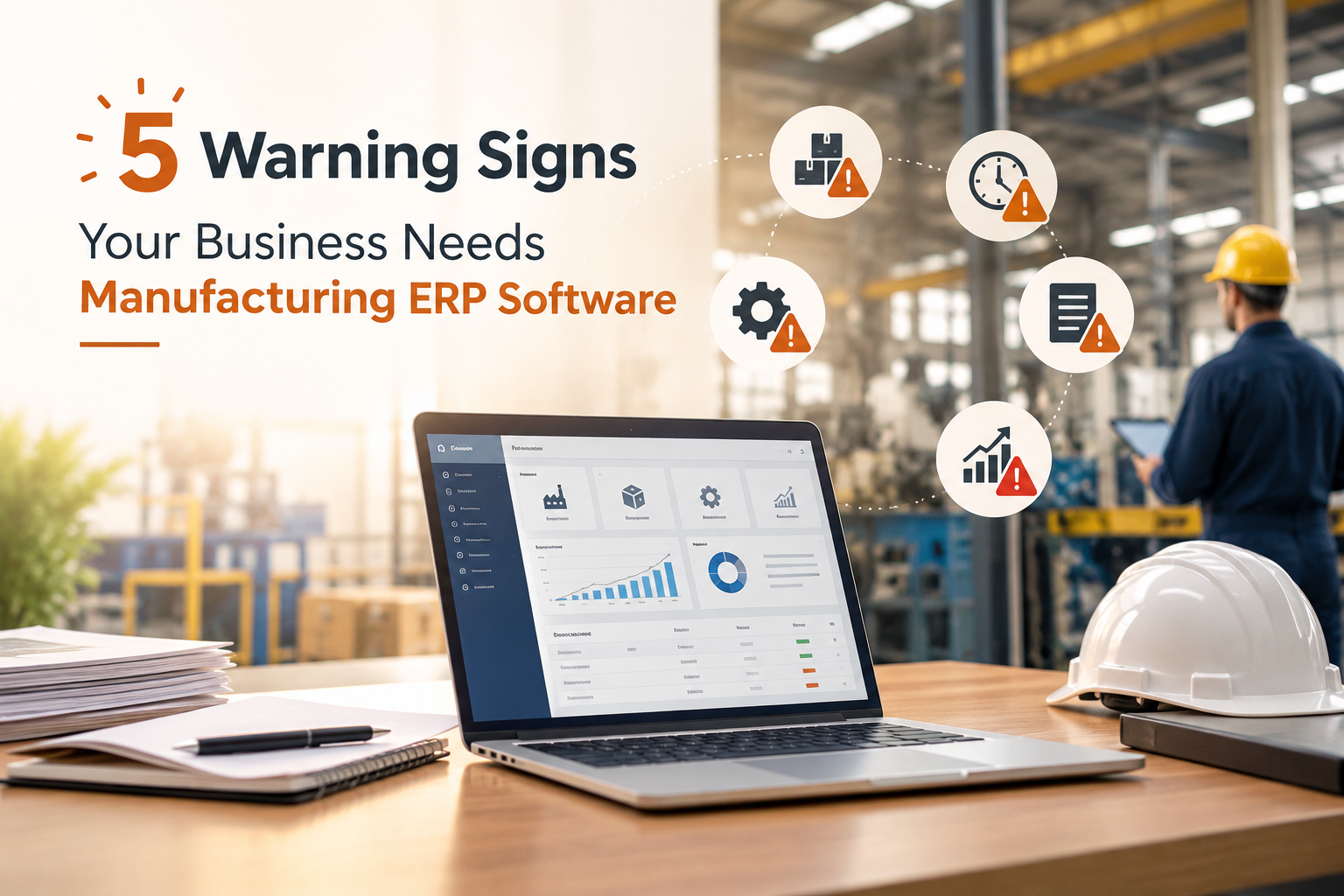
Manufacturing companies today face increasing pressure to reduce costs, improve product quality, manage inventory efficiently, and deliver orders on time. Traditional spreadsheets and disconnected software systems often create data silos, making it difficult to manage operations effectively. This is why implementing an ERP for Manufacturing Industry has become essential for businesses looking to stay competitive.
An ERP system integrates production, inventory, purchasing, sales, finance, quality control, human resources, and customer management into a single platform. With real-time data and automated workflows, manufacturers can improve productivity, reduce waste, and make better business decisions.
Benefits of ERP for Manufacturing Industry
The biggest advantage of implementing manufacturing ERP software is improved operational efficiency. Businesses that adopt ERP solutions often experience better production planning, lower inventory costs, improved machine utilization, and faster order processing. The detailed advantages are explained in our guide on Benefits of ERP Manufacturing.
Manufacturers can also achieve:
Better process control
Reduced operational costs
Improved inventory accuracy
Faster decision making
Higher customer satisfaction
Timely product delivery
ERP helps organizations reduce waste and improve profitability while maintaining quality standards.
Manufacturing Industry Challenges
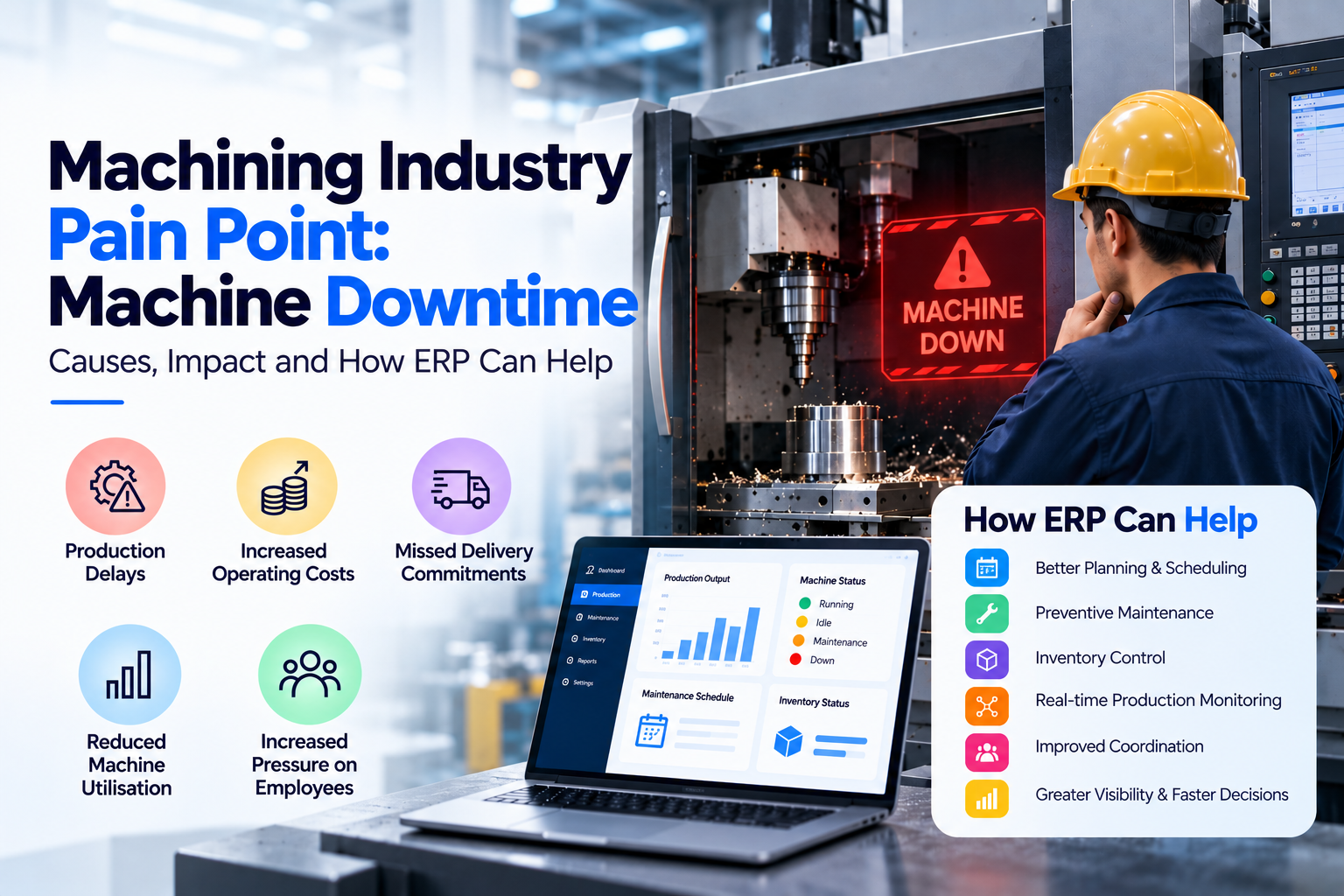
Modern manufacturers face several operational challenges, including inventory inaccuracies, production delays, quality issues, rising costs, and lack of visibility across departments. These common issues are discussed in detail in our article on Manufacturing Industries Challenges.
ERP software addresses these problems through:
Real-time information
Automated workflows
Better planning
Improved communication
Accurate reporting
ERP and Manufacturing: How ERP Modules Work Together
The relationship between ERP and Manufacturing becomes clear when manufacturers see how different ERP modules work together.
Key modules include:
Production Planning
Helps schedule jobs, allocate resources, and improve production efficiency.
Inventory Management
Provides real-time stock visibility and prevents shortages.
Purchase Management
Automates procurement and supplier management.
Quality Management
Ensures products meet required specifications.
Sales Management
Manages quotations, orders, dispatches, and customer interactions.
Accounting & Finance
Tracks costs, profitability, GST compliance, and financial reporting.
HRMS & Payroll
Manages employee records, attendance, leave, and payroll.
CRM
Supports customer relationship management and lead tracking.
When all modules are integrated, manufacturers gain complete visibility over operations.
Best ERP for Manufacturing Industry
Choosing the Best ERP for Manufacturing Industry depends on business size, industry requirements, budget, and future growth plans.
Top 10 ERP Solutions for Manufacturers
SAP S/4HANA
Freedom ERP
Oracle NetSuite
Microsoft Dynamics 365
Epicor ERP
Infor CloudSuite Industrial
Acumatica
Odoo
SYSPRO
Plex Manufacturing Cloud
Freedom ERP is particularly suitable for Indian manufacturers because it provides industry-specific manufacturing modules at a competitive cost while supporting production planning, inventory management, quality control, finance, payroll, CRM, and business intelligence.
Achieving a Data-Driven Manufacturing Business with ERP Software
Today’s successful manufacturers rely heavily on data for planning and growth. Through Achieving a Data-Driven Manufacturing Business with ERP Software, companies can collect information from every department and convert it into actionable insights.
ERP data helps with:
Demand forecasting
Production planning
Inventory optimization
Cost reduction
Quality improvement
Profitability analysis
Management teams can use ERP dashboards and reports to make faster and more accurate business decisions.
Manufacturing ERP for Small Medium Sized Businesses
Many small and medium manufacturers believe ERP systems are only suitable for large enterprises. However, Manufacturing ERP for Small Medium Sized Businesses has become increasingly important as competition grows.
Small manufacturers often struggle with:
Limited inventory
Limited cash flow
Limited customer base
Manual processes
Lack of business visibility
ERP helps SMEs streamline operations, improve customer service, optimize inventory, and support long-term growth.
Future Trends in ERP for Manufacturing Industries
Technology is transforming manufacturing rapidly. According to our article on Future Trends in ERP for Manufacturing Industries, the next generation of ERP systems will be driven by AI, analytics, cloud computing, and IoT.
Emerging trends include:
Artificial Intelligence (AI)
AI-powered ERP systems can predict demand, optimize schedules, and improve production planning.
Advanced Analytics
Manufacturers can identify trends and opportunities using real-time dashboards and predictive reports.
Cloud ERP
Cloud-based ERP solutions provide flexibility, scalability, and lower infrastructure costs.
IoT Integration
Connected machines can send live production data directly into ERP systems.
Predictive Maintenance
ERP systems can analyze machine performance and predict failures before downtime occurs.
Conclusion
Implementing an ERP for Manufacturing Industry enables manufacturers to improve efficiency, reduce costs, increase productivity, and support sustainable growth. By leveraging modules such as production planning, inventory management, purchasing, quality control, finance, HRMS, CRM, and business intelligence, businesses can achieve complete operational visibility.
Whether you are a large enterprise or a growing SME, modern manufacturing ERP software provides the tools needed to overcome manufacturing challenges, become data-driven, and prepare for the future of smart manufacturing.