Introduction
Running a manufacturing business involves much more than producing products. Every day, teams need to coordinate raw materials, production planning, inventory, sales orders, purchasing, quality, machine utilization, and deliveries.
As a business grows, managing these activities through spreadsheets, paperwork, emails, and disconnected systems can create operational challenges. Material shortages, inaccurate production schedules, inventory discrepancies, machine downtime, and delayed reporting can affect productivity and customer commitments.
This is where a Manufacturing ERP, becomes valuable.
By connecting business processes with manufacturing data, an ERP system can help manufacturers improve operational visibility, coordinate departments, reduce manual work, and make more informed decisions.
But how do you know when your business needs one?
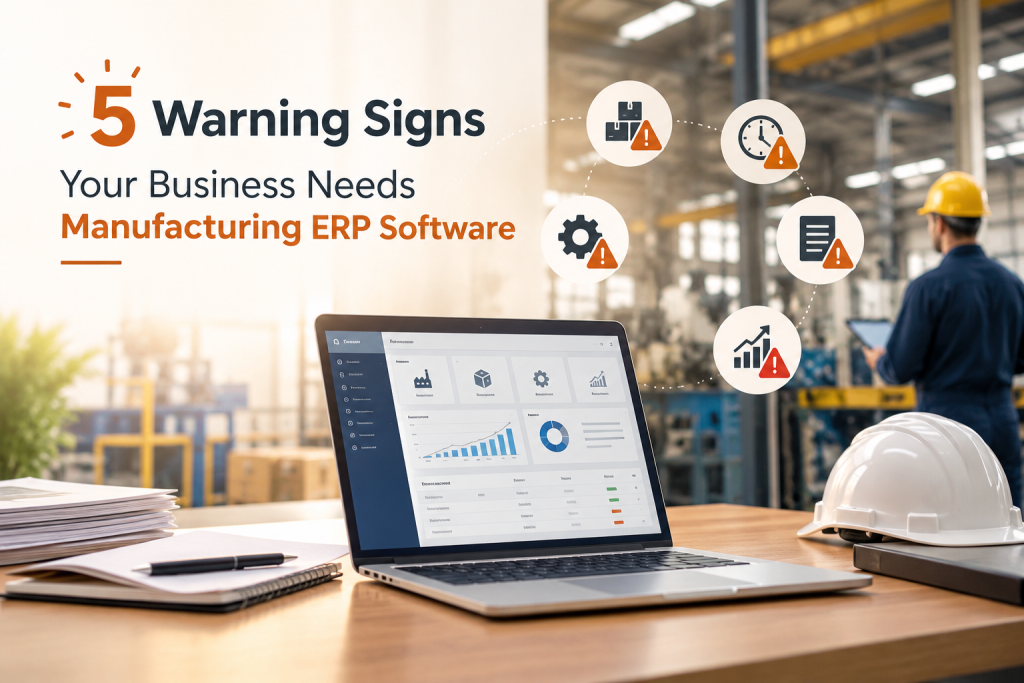
Here are five signs to look out for.
What Is a Manufacturing ERP?
A Manufacturing ERP, is an integrated business management system designed to connect manufacturing operations, including production planning, material requirements planning (MRP), inventory, purchasing, sales, quality management, finance, and dispatch.
Instead of maintaining separate records across multiple applications, businesses can manage connected processes through a centralized platform.
For example, when a sales order is confirmed, the system can use relevant information such as the bill of materials (BOM), current stock levels, and production requirements to support material planning and scheduling, depending on the ERP’s capabilities.
This helps manufacturers improve coordination between departments and maintain better visibility into their operations.
1. Inventory Inaccuracies and Frequent Material Shortages
Does your production team frequently discover that raw materials are unavailable even when inventory records show sufficient stock?
Inventory discrepancies can occur when stock movements, material consumption, rejected materials, and production allocations are not recorded accurately.
Common technical challenges include:
- Differences between physical stock and system records
- Poor material allocation across production orders
- Incorrect reorder levels and purchase planning
- Limited batch and lot tracking
- Excess inventory alongside unexpected material shortages
A Manufacturing ERP with integrated inventory management, stock tracking, and material planning capabilities can help improve inventory accuracy and material availability.
By connecting inventory with purchasing and production, manufacturers can make better-informed decisions about material requirements and replenishment.
2. Production Planning and MRP Errors
Production planning becomes complicated when manufacturers manage multiple customer orders, material requirements, machine capacities, and delivery schedules.
Without reliable data, production teams may face frequent schedule changes, incomplete material availability, and delays in fulfilling customer orders.
Common warning signs include:
- Inaccurate Bill of Materials (BOM)
- Material Requirements Planning (MRP) errors
- Production schedules that exceed available capacity
- Incorrect operation sequences or routing information
- Frequent production rescheduling
- Difficulty tracking work orders and planned versus actual output
A Manufacturing ERP can connect BOM management, MRP, production scheduling, inventory, and work-order tracking.
This helps production teams plan material requirements more effectively, identify potential shortages, and coordinate manufacturing activities according to business priorities.
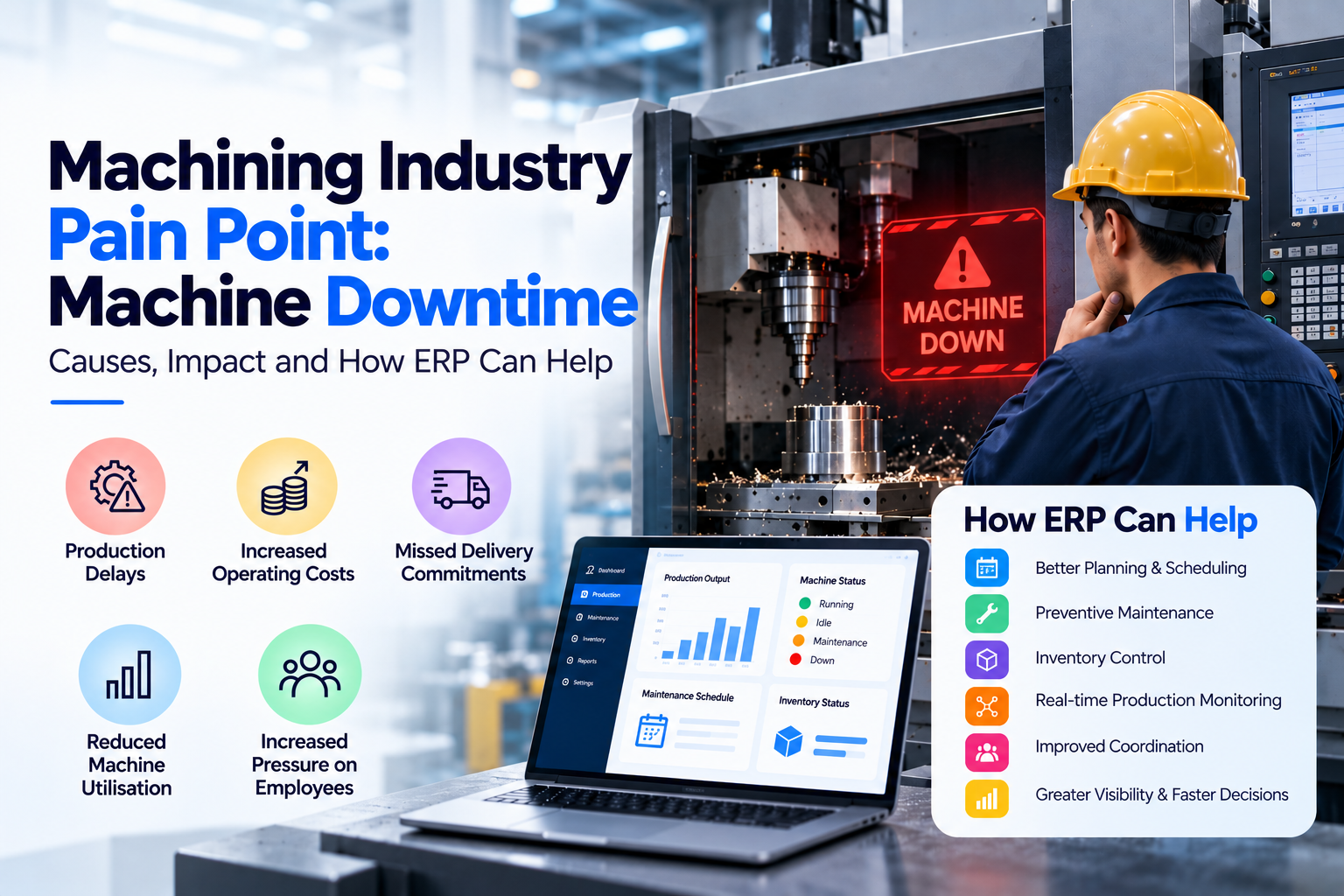
3. Machine Downtime and Production Bottlenecks
Machine availability and production efficiency directly affect manufacturing output and delivery commitments.
When downtime is recorded manually, identifying recurring equipment problems and production bottlenecks can become difficult.
Technical challenges may include:
- Unplanned machine stoppages
- Limited Overall Equipment Effectiveness (OEE) monitoring
- Poor visibility into machine utilization
- Delayed preventive maintenance
- Production bottlenecks at specific work centres
- Differences between planned and actual production output
A Manufacturing ERP, with production monitoring, maintenance management, and suitable machine-data integration can help businesses track performance and identify areas for improvement.
Where real-time machine monitoring is required, IoT integration may provide additional visibility into machine status and production performance.
4. Quality Issues and Traceability Gaps
Maintaining product quality requires accurate records of materials, inspections, production processes, and finished goods.
When quality data is maintained separately from production and inventory records, identifying the source of a defect or rejected batch can take valuable time.
Common quality management challenges include:
- Incomplete raw material batch traceability
- Disconnected inspection and production records
- Difficulty identifying recurring defects
- Poor tracking of scrap and rework
- Delays in non-conformance reporting and corrective actions
- Limited visibility into quality-related production costs
A Manufacturing ERP with quality management, inspection tracking, and batch or serial-number traceability can help connect quality records with relevant manufacturing activities.
This can support faster investigations, better process control, and more consistent quality reporting.
5. Limited Visibility into Manufacturing Costs and Operations
Management needs timely information about inventory, production progress, purchasing requirements, order status, and manufacturing costs.
However, when information is spread across multiple spreadsheets and applications, preparing accurate reports can become time-consuming.
Watch for these warning signs:
- Difficulty calculating material, labour, and overhead costs
- Limited visibility into work-in-progress (WIP)
- Delays in production and inventory reporting
- Difficulty comparing planned costs with actual costs
- Inconsistent information between departments
- Lack of timely operational dashboards
A Manufacturing ERP, can connect production, inventory, purchasing, quality, and financial information to support better reporting and operational decisions.
With suitable dashboards and analytics, management can gain a clearer view of manufacturing performance and identify issues that require attention.
Why Manufacturing ERP Matters for Growing Businesses
A Manufacturing ERP is more than a replacement for spreadsheets. It provides a connected platform for coordinating manufacturing processes and maintaining consistent business information.
The right Manufacturing ERP software can help manufacturers improve:
- Inventory accuracy and material availability
- Production planning and scheduling
- BOM management and MRP
- Machine utilization and maintenance coordination
- Quality management and traceability
- Manufacturing cost tracking
- Operational reporting and decision-making
However, the benefits depend on selecting the right functionality, maintaining accurate data, configuring workflows correctly, and ensuring employees adopt the system effectively.
Businesses should evaluate a Manufacturing ERP based on their production requirements, business processes, integration needs, scalability, implementation approach, and support requirements.
Is Your Business Ready for a Manufacturing ERP?
If your manufacturing business experiences frequent material shortages, production planning errors, machine downtime, quality issues, or limited operational visibility, it may be time to consider a Manufacturing ERP solution.
The goal is to connect business processes, improve information accuracy, and help employees coordinate their activities more effectively.
Looking for an End-to-End Manufacturing ERP?
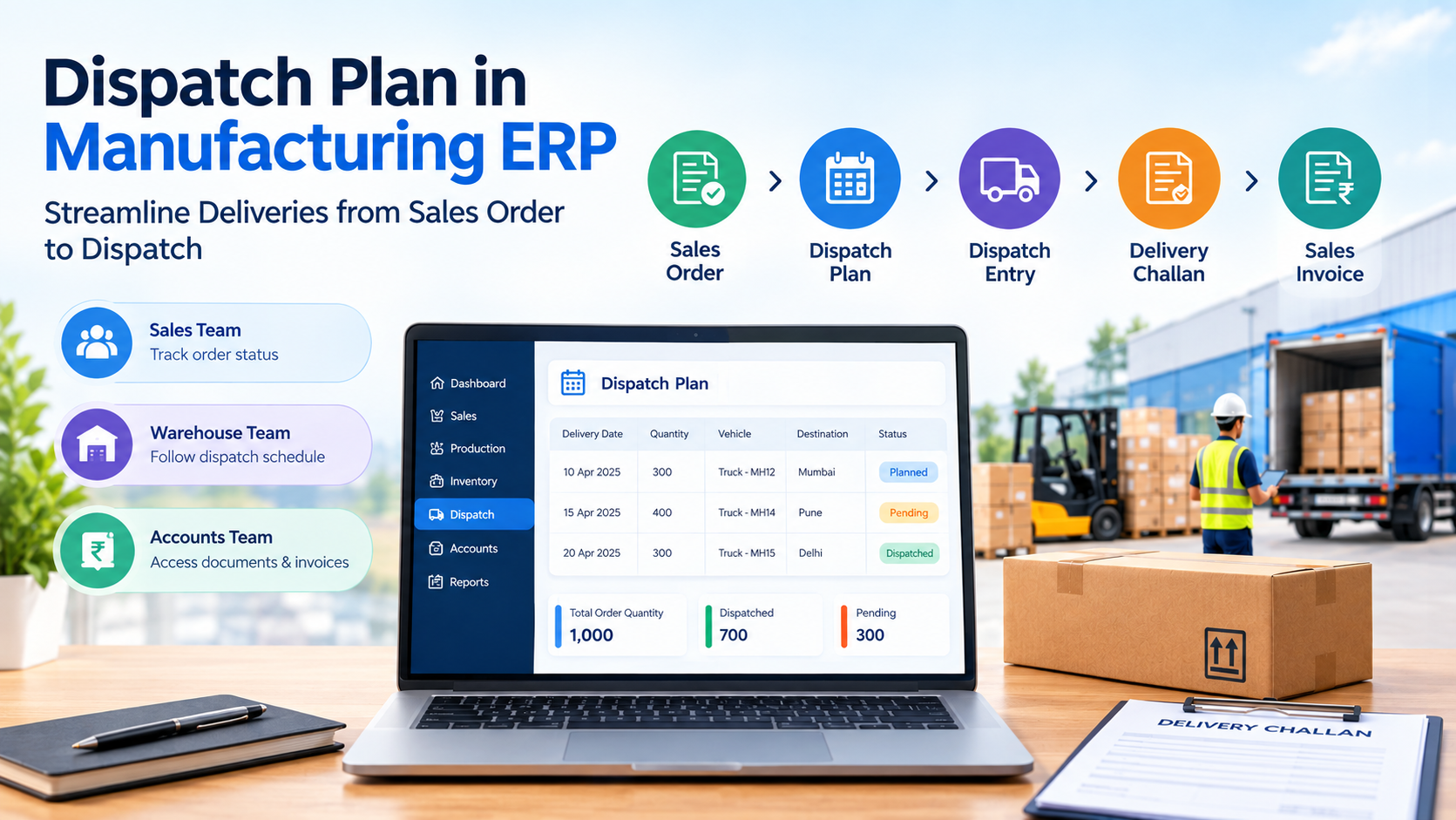
Freedom ERP is a comprehensive manufacturing ERP solution designed to support manufacturing operations, from sales and planning to production, inventory, quality, purchasing, accounts, maintenance, and dispatch.
Managing different departments through disconnected applications can create duplicate data entry, communication gaps, and delays in decision-making.
With Freedom ERP manufacturers can bring their core business processes together on a single platform, improve operational visibility, and gain better control over their manufacturing activities.
One Platform. Every Process. Complete Manufacturing Control.
Conclusion
Recognizing the signs that your business needs a Manufacturing ERP is the first step towards improving manufacturing operations.
From inventory management and MRP to production scheduling, machine performance, quality control, and manufacturing cost visibility, an integrated system can help your teams work with connected business information.
Ready to improve your manufacturing operations?
Explore Freedom ERP and discover how Manufacturing ERP software can help your business improve visibility, coordination, and operational control.