Plastic & Rubber Manufacturing ERP: Complete Guide to Smarter Production, Inventory & Business Growth
The manufacturing industry is evolving rapidly, with businesses under constant pressure to reduce costs, improve quality, and deliver products faster. Whether you produce plastic components, rubber products, molded parts, or industrial materials, managing production manually or using disconnected software can slow your operations. This is where Plastic & Rubber Manufacturing ERP becomes a game-changing solution.
A modern ERP (Enterprise Resource Planning) system integrates production planning, inventory management, procurement, quality control, finance, sales, and customer management into a single platform. Instead of relying on spreadsheets and multiple software tools, manufacturers gain complete visibility over every stage of production.
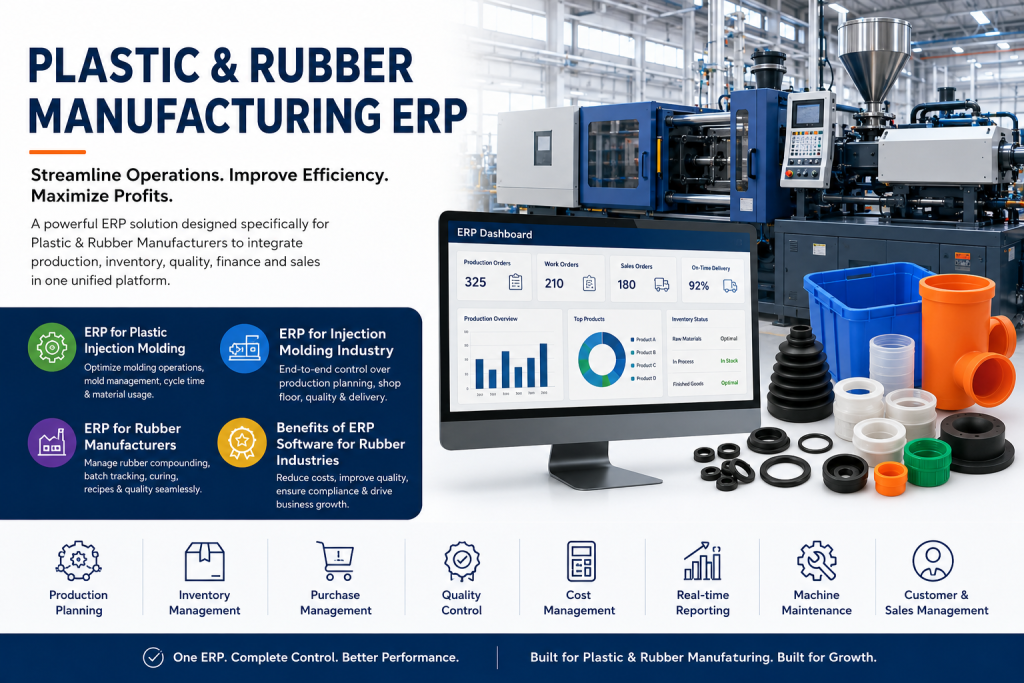
This comprehensive guide explains how Plastic & Rubber Manufacturing ERP helps businesses streamline manufacturing while also covering important solutions such as benefits of ERP software for rubber industries, ERP for Plastic Injection Molding, ERP for Injection Molding Industry, and ERP for Rubber Manufacturers.
What is Plastic & Rubber Manufacturing ERP?
Plastic & Rubber Manufacturing ERP is specialized enterprise software designed for manufacturers involved in plastic processing, rubber production, extrusion, injection molding, blow molding, compression molding, and related industries.
Unlike generic ERP systems, it includes manufacturing-specific modules that handle:
-
Production Planning
-
Material Requirement Planning (MRP)
-
Batch Tracking
-
Inventory Management
-
Purchase Management
-
Sales & Distribution
-
Vendor Management
-
Machine Scheduling
-
Quality Control
-
Cost Analysis
-
Financial Accounting
By integrating all departments, manufacturers gain real-time visibility into operations and improve overall efficiency.
Why Plastic and Rubber Manufacturers Need ERP
Manufacturers often face challenges such as:
-
Raw material wastage
-
Production delays
-
Inventory mismatches
-
Machine downtime
-
Inaccurate production planning
-
Poor quality control
-
Rising operational costs
-
Delayed customer deliveries
Without an integrated system, these problems increase production expenses and reduce profitability.
A dedicated ERP solution eliminates manual processes by automating workflows and providing accurate data across departments.
Key Features of Plastic & Rubber Manufacturing ERP
Production Planning
ERP helps manufacturers schedule production based on:
-
Customer orders
-
Available raw materials
-
Machine capacity
-
Workforce availability
-
Production priorities
This minimizes idle machine time while maximizing productivity.
Inventory Management
Inventory is one of the biggest cost centers in manufacturing.
ERP enables businesses to monitor:
-
Raw materials
-
Semi-finished goods
-
Finished products
-
Warehouse stock
-
Safety stock levels
-
Material movement
Real-time inventory prevents stock shortages and overstocking.
Material Requirement Planning (MRP)
MRP automatically calculates material requirements using:
-
Production schedules
-
Existing inventory
-
Pending purchase orders
-
Sales forecasts
This ensures uninterrupted production with optimized purchasing.
Quality Control
Quality management becomes easier through ERP by tracking:
-
Incoming material inspections
-
In-process quality checks
-
Final product inspections
-
Customer complaints
-
Corrective actions
Manufacturers can maintain consistent product quality while reducing rejection rates.
Machine Maintenance
Unexpected machine breakdowns lead to production losses.
ERP helps schedule:
-
Preventive maintenance
-
Machine servicing
-
Spare part management
-
Maintenance history
-
Downtime analysis
This increases machine availability and production efficiency.
Cost Management
Manufacturers can calculate actual production costs by tracking:
-
Material costs
-
Labor costs
-
Machine expenses
-
Utility consumption
-
Packaging costs
-
Transportation costs
Accurate costing improves pricing strategies and profitability.
Benefits of ERP Software for Rubber Industries
The benefits of ERP software for rubber industries extend far beyond basic accounting and inventory management. Rubber manufacturers deal with complex formulations, batch production, strict quality standards, and fluctuating raw material costs. An ERP system helps simplify these challenges by integrating every department into one centralized platform.
Key advantages include:
-
Improved batch traceability
-
Better production scheduling
-
Reduced material wastage
-
Real-time inventory visibility
-
Faster order processing
-
Enhanced quality compliance
-
Accurate production costing
-
Better customer service
-
Improved vendor management
-
Data-driven business decisions
By implementing ERP, rubber manufacturers gain greater operational control while increasing overall profitability.
ERP for Plastic Injection Molding
Plastic injection molding is one of the most demanding manufacturing processes. Managing molds, machine utilization, cycle times, raw materials, and customer orders requires complete coordination.
An ERP for Plastic Injection Molding offers specialized features such as:
-
Mold management
-
Machine scheduling
-
Production monitoring
-
Cycle time analysis
-
Material consumption tracking
-
Scrap monitoring
-
Order management
-
Preventive maintenance
-
Tool lifecycle management
-
Real-time production reports
Manufacturers can significantly reduce production delays while improving product consistency.
ERP for Injection Molding Industry
An ERP for Injection Molding Industry provides complete control over manufacturing operations from quotation to delivery.
Major capabilities include:
Production Scheduling
Automatically plans production based on:
-
Machine availability
-
Mold availability
-
Customer priorities
-
Delivery deadlines
Material Planning
Ensures timely procurement of:
-
Plastic granules
-
Additives
-
Color masterbatch
-
Packaging materials
Shop Floor Monitoring
Managers receive live production updates including:
-
Machine status
-
Operator performance
-
Output quantity
-
Downtime reports
-
Rejection analysis
Quality Assurance
ERP tracks:
-
Production batches
-
Inspection reports
-
Defect analysis
-
Customer returns
This helps manufacturers maintain consistent product quality.
ERP for Rubber Manufacturers
An ERP for Rubber Manufacturers is designed to handle the unique requirements of rubber processing industries, including compound preparation, curing, molding, extrusion, and finishing operations.
Essential ERP modules include:
Raw Material Management
Track:
-
Natural rubber
-
Synthetic rubber
-
Chemicals
-
Fillers
-
Additives
Batch Management
Maintain complete traceability for every production batch, making it easier to identify issues and meet regulatory requirements.
Recipe Management
ERP stores approved formulations while ensuring consistency across every production cycle.
Production Monitoring
Managers can monitor:
-
Daily production
-
Batch progress
-
Material consumption
-
Machine utilization
-
Operator efficiency
Customer Order Management
ERP connects sales with production, enabling faster order fulfillment and improved customer satisfaction.
How ERP Improves Supply Chain Management
Supply chain disruptions can significantly impact production.
ERP helps manufacturers by:
-
Managing supplier performance
-
Tracking purchase orders
-
Monitoring inventory movement
-
Forecasting demand
-
Improving warehouse efficiency
-
Reducing procurement delays
A connected supply chain results in lower operational costs and better customer service.
Business Intelligence and Reporting
Modern ERP systems provide real-time dashboards that help management make informed decisions.
Reports include:
-
Production efficiency
-
Inventory valuation
-
Machine utilization
-
Sales analysis
-
Purchase reports
-
Financial statements
-
Profitability analysis
-
Customer order status
These insights enable faster and more strategic decision-making.
Advantages of Cloud-Based ERP
Many manufacturers are moving toward cloud ERP because it offers:
-
Anywhere access
-
Lower IT costs
-
Automatic updates
-
Better security
-
Faster implementation
-
Easy scalability
-
Remote monitoring
-
Real-time collaboration
Cloud ERP is particularly beneficial for companies operating multiple factories or warehouses.
Choosing the Right ERP for Plastic & Rubber Manufacturing
Before selecting an ERP solution, businesses should evaluate:
-
Industry-specific functionality
-
Ease of customization
-
Scalability
-
Mobile accessibility
-
Integration capabilities
-
User-friendly interface
-
Reporting features
-
Technical support
-
Implementation experience
-
Total cost of ownership
Choosing an ERP designed specifically for manufacturing ensures quicker implementation and better long-term value.
Future Trends in Manufacturing ERP
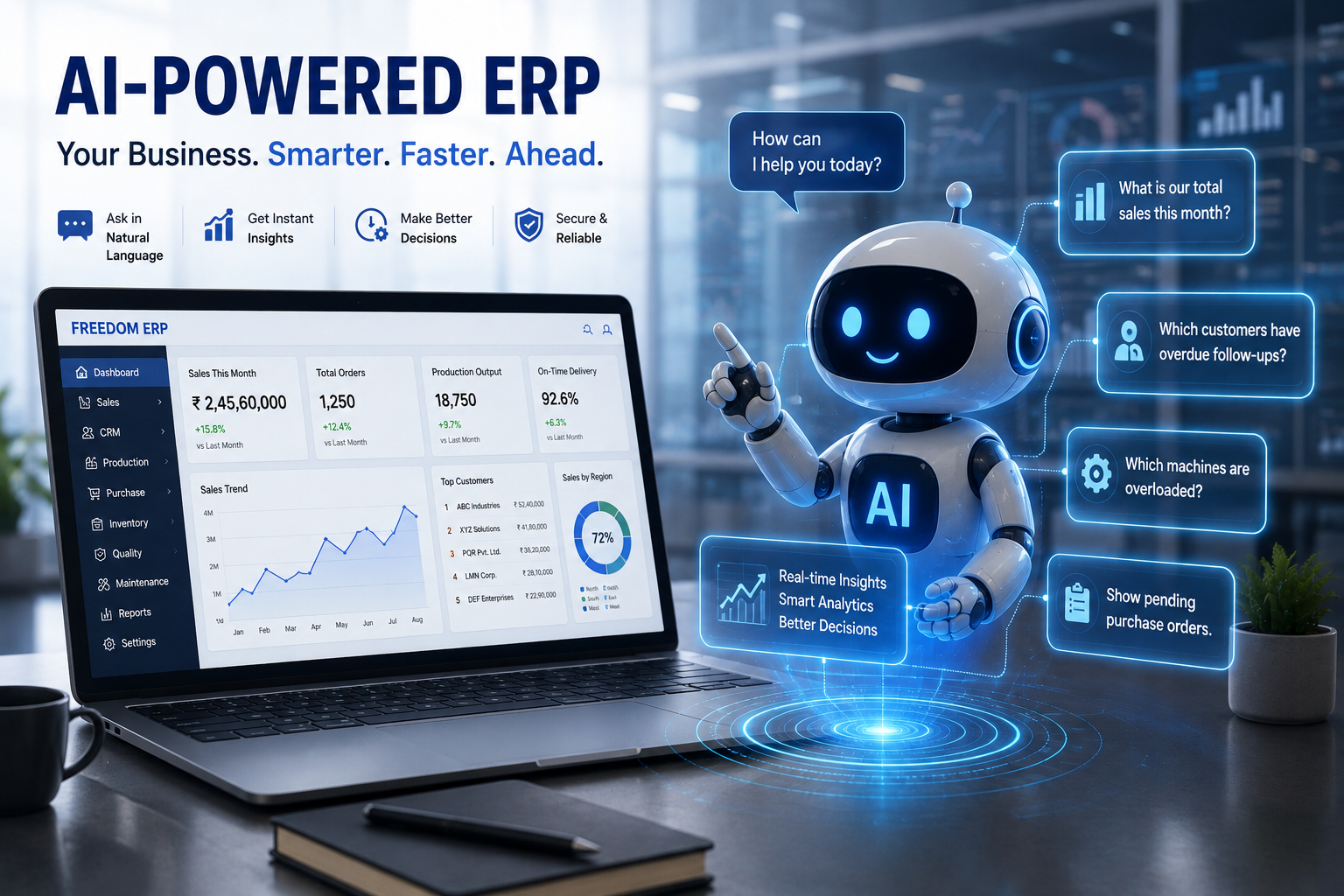
The next generation of manufacturing ERP systems is powered by advanced technologies, including:
-
Artificial Intelligence (AI)
-
Machine Learning
-
IoT-enabled production monitoring
-
Predictive maintenance
-
Advanced analytics
-
Digital twins
-
Barcode and RFID integration
-
Cloud computing
-
Mobile ERP applications
These innovations help manufacturers improve productivity while staying competitive in a rapidly changing market.
Conclusion
Investing in Plastic & Rubber Manufacturing ERP is more than a software upgrade—it is a strategic move toward greater efficiency, accuracy, and business growth. By integrating production planning, inventory, procurement, quality control, finance, and customer management into one platform, manufacturers can reduce costs, improve operational visibility, and deliver products on time.
Whether your business focuses on plastic processing, injection molding, or rubber manufacturing, a specialized ERP system can transform daily operations and support sustainable growth. Solutions tailored for the benefits of ERP software for rubber industries, ERP for Plastic Injection Molding, ERP for Injection Molding Industry, and ERP for Rubber Manufacturers provide the industry-specific capabilities needed to meet modern manufacturing demands. As digital transformation accelerates, implementing the right ERP solution positions your business for long-term success in an increasingly competitive marketplace.