ERP for Injection Molding Industry: Transforming Manufacturing Efficiency and Profitability
The injection molding industry is one of the most competitive sectors in manufacturing. Companies must manage complex production schedules, maintain strict quality standards, control material costs, and meet customer delivery deadlines. To stay competitive, manufacturers need a centralized system that connects all business operations. This is where ERP for Injection Molding Industry plays a critical role.
An ERP system helps injection molding businesses streamline production, improve inventory management, track costs accurately, and gain complete visibility into operations. By integrating departments and automating processes, manufacturers can improve efficiency while reducing operational expenses.
What is ERP for Injection Molding Industry?
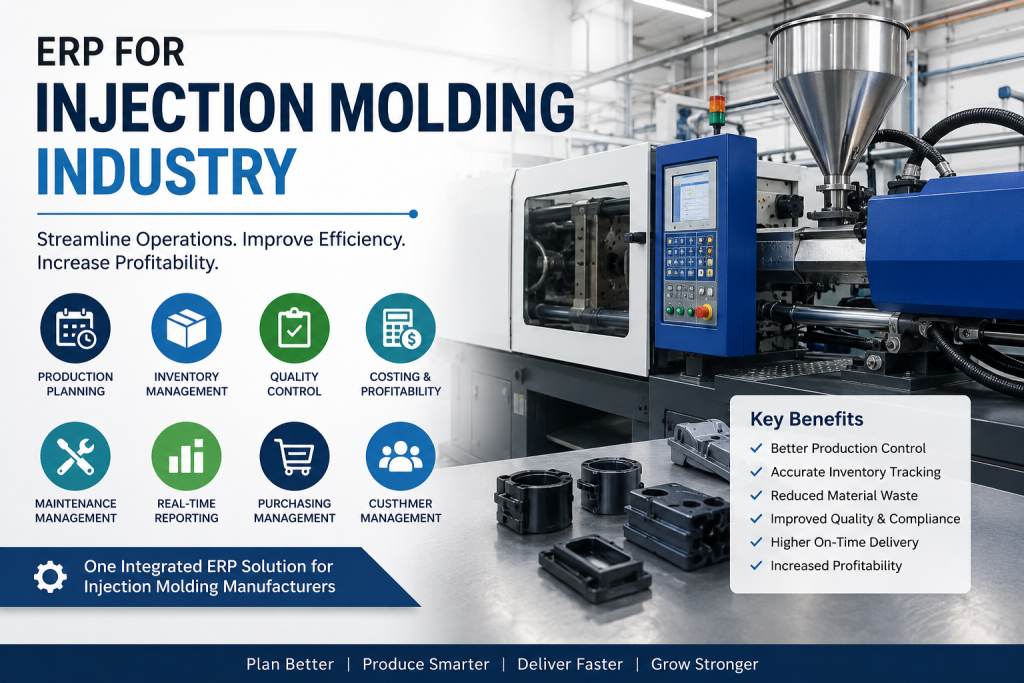
ERP for Injection Molding Industry refers to enterprise resource planning software specifically designed to address the unique requirements of plastic injection molding manufacturers. It combines production planning, inventory management, purchasing, quality control, maintenance, sales, and accounting into a single platform.
Instead of relying on spreadsheets and disconnected software systems, injection molding companies can manage their entire operation through one centralized solution. This improves communication, reduces errors, and supports better decision-making.
Why Injection Molding Companies Need ERP Software
Injection molding manufacturers face several operational challenges, including fluctuating material prices, machine downtime, quality issues, and complex production scheduling. A dedicated ERP solution helps overcome these challenges by providing real-time information across all departments.
Some key reasons manufacturers invest in ERP for Injection Molding Industry include:
Better production planning
Improved machine utilization
Accurate inventory tracking
Reduced material waste
Enhanced quality control
Faster customer response times
Improved profitability
These benefits help businesses remain competitive while meeting increasing customer expectations.
Key Features of ERP for Injection Molding Industry
Production Planning and Scheduling
Efficient production scheduling is essential for injection molding operations. ERP software helps manufacturers optimize machine capacity, labor allocation, and production timelines.
Real-time scheduling ensures jobs are completed on time while minimizing bottlenecks and downtime.
Inventory Management
Raw materials represent a significant portion of manufacturing costs. ERP for Injection Molding Industry provides real-time visibility into resin inventory, additives, packaging materials, and finished goods.
Accurate inventory management helps prevent stock shortages and excessive inventory carrying costs.
For manufacturers looking to improve production control, explore this guide on ERP and Manufacturing.
Quality Control Management
Maintaining consistent product quality is critical in injection molding. ERP systems track quality inspections, defects, corrective actions, and compliance requirements.
This helps manufacturers reduce rework and improve customer satisfaction.
Job Costing and Profitability Analysis
Accurate costing is essential for competitive pricing. ERP software tracks material usage, labor expenses, machine time, and overhead costs to calculate true production costs.
This enables manufacturers to identify profitable products and improve pricing strategies.
Maintenance Management
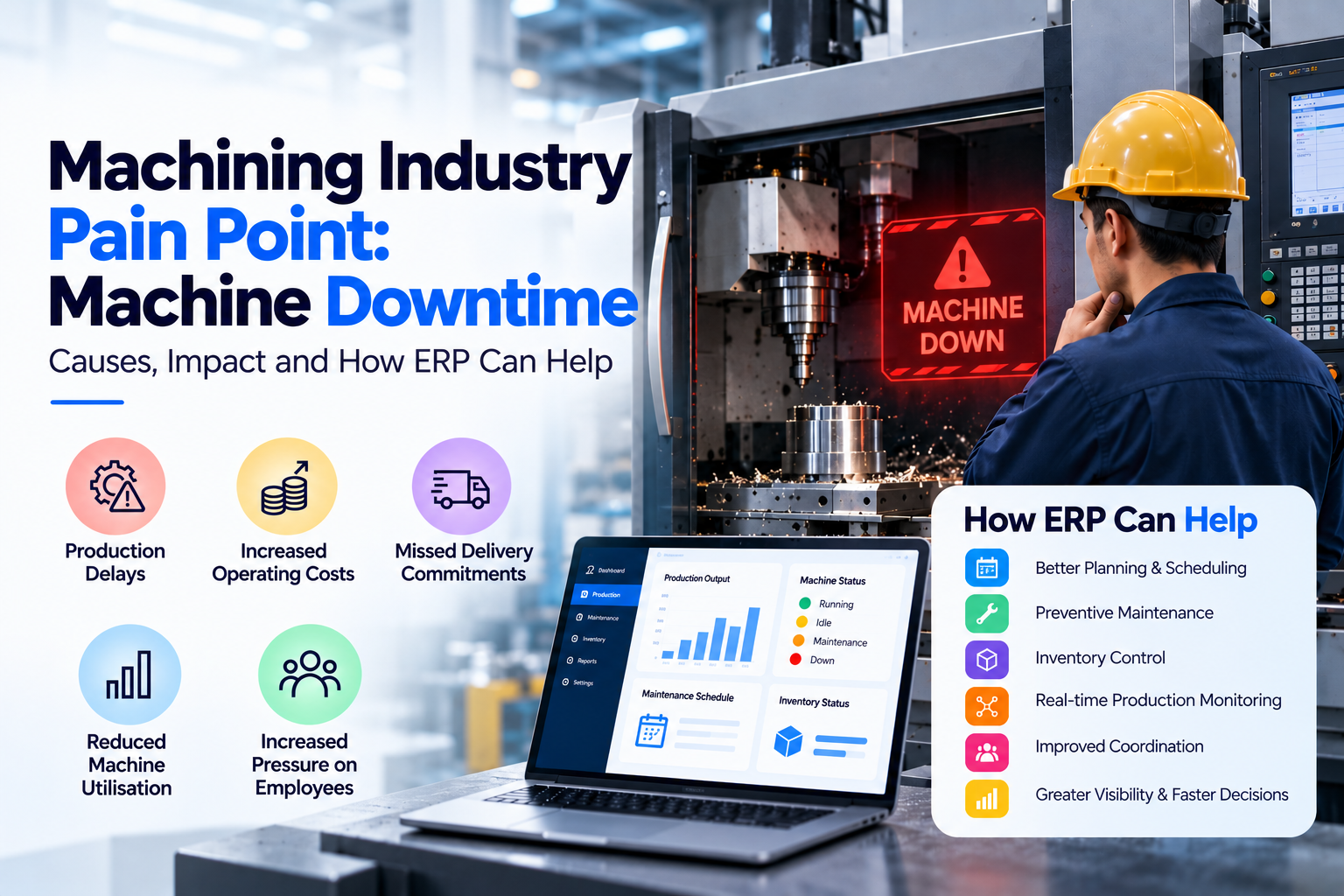
Machine downtime can significantly impact production schedules. ERP software helps schedule preventive maintenance activities and track equipment performance.
This ensures molding machines operate efficiently and reduces unexpected breakdowns.
Benefits of ERP for Injection Molding Industry
Improved Operational Efficiency
By automating routine processes, ERP software reduces administrative workload and improves productivity across departments.
Better Resource Utilization
Manufacturers can maximize machine usage and workforce productivity through improved planning and scheduling.
Reduced Material Waste
Real-time monitoring of material consumption helps minimize scrap and optimize raw material utilization.
Faster Decision-Making
Access to real-time data enables managers to identify issues quickly and make informed decisions.
Enhanced Customer Service
ERP systems provide accurate order tracking and delivery information, improving communication with customers.
For additional insights into manufacturing efficiency improvements, read Benefits of ERP Manufacturing.
Common Challenges Solved by ERP
Production Delays
Manual planning often creates scheduling conflicts and missed deadlines. ERP for Injection Molding Industry helps streamline production scheduling and improve delivery performance.
Inventory Shortages
ERP software tracks inventory levels in real time, helping businesses avoid material shortages that disrupt production.
Costing Inaccuracies
Without proper tracking, manufacturers may underestimate production costs. ERP systems provide detailed cost analysis for every product and job.
Quality Issues
Integrated quality management helps identify defects early and maintain consistent production standards.
Lack of Visibility
ERP provides a centralized platform where management can monitor production, inventory, purchasing, sales, and finance activities.
Industries Benefiting from Injection Molding ERP
ERP solutions are widely used in various plastic manufacturing sectors, including:
Automotive plastic components
Consumer goods manufacturing
Medical device production
Packaging products
Electronics components
Industrial plastic parts
Household product manufacturing
These industries require accurate planning, quality control, and cost management to remain competitive.
Choosing the Right ERP Solution
When evaluating ERP for Injection Molding Industry, manufacturers should consider several important factors.
Industry-Specific Functionality
Choose ERP software designed specifically for manufacturing environments and injection molding operations.
Scalability
The solution should support business growth and increasing production demands.
Integration Capabilities
ERP should integrate with shop floor equipment, accounting software, and customer management systems.
User-Friendly Interface
An easy-to-use system improves employee adoption and reduces training requirements.
Vendor Support
Reliable implementation and ongoing support are critical for long-term ERP success.
Future Trends in Injection Molding ERP
The future of ERP for Injection Molding Industry is being shaped by advanced technologies such as:
Artificial Intelligence (AI)
Industrial Internet of Things (IIoT)
Predictive Maintenance
Cloud ERP Platforms
Real-Time Production Analytics
Machine Learning
These technologies help manufacturers improve efficiency, reduce downtime, and make more accurate business decisions.
Conclusion
ERP for Injection Molding Industry is becoming an essential tool for manufacturers seeking greater efficiency, profitability, and operational control. By integrating production planning, inventory management, quality control, maintenance, and financial processes into a single platform, ERP software helps businesses streamline operations and improve performance.
As competition continues to grow, manufacturers that invest in the right ERP solution will be better positioned to reduce costs, enhance customer satisfaction, and achieve long-term success. Whether your business produces automotive components, medical products, or consumer goods, implementing ERP can provide the visibility and control needed to thrive in today’s manufacturing environment.