ERP for Rubber Manufacturers: Transforming Production with Smart Manufacturing Solutions
The rubber manufacturing industry is highly competitive and demands precision, efficiency, and consistent quality. Managing raw materials, production planning, inventory, procurement, quality control, and customer orders manually can lead to delays, wastage, and increased operational costs. This is where an ERP for Rubber Manufacturers becomes an essential business solution.
An Enterprise Resource Planning (ERP) system integrates all business functions into a single platform, enabling manufacturers to streamline operations, improve productivity, and make data-driven decisions. Whether you manufacture automotive rubber parts, industrial rubber products, seals, hoses, tires, or custom molded components, an ERP system helps optimize every stage of production.
What is ERP for Rubber Manufacturers?
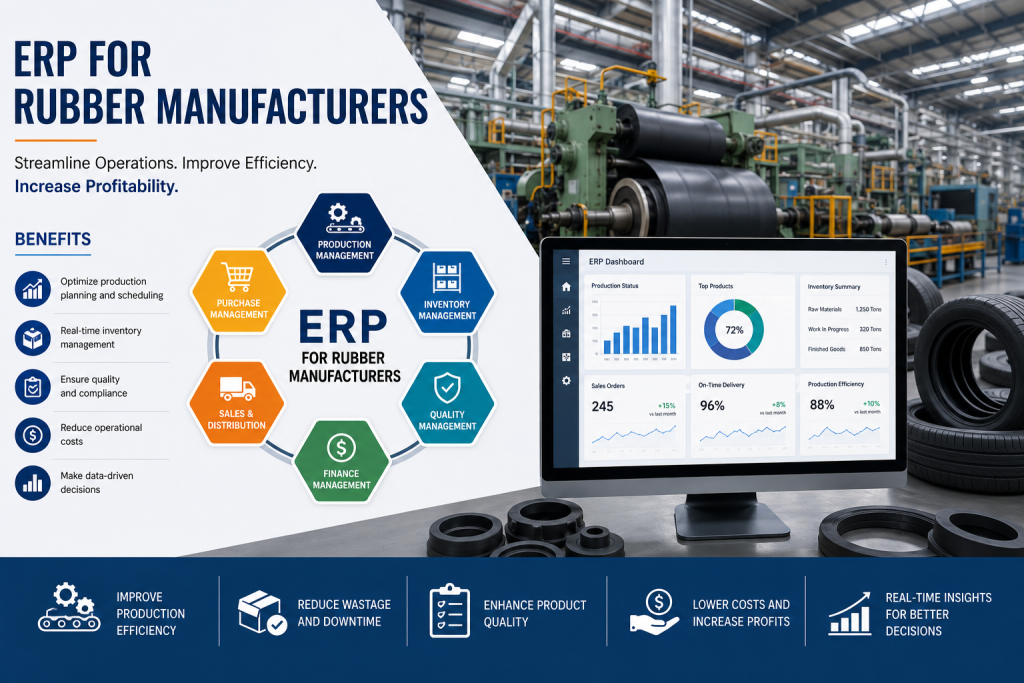
ERP for Rubber Manufacturers is specialized software designed to manage the unique operational requirements of rubber production businesses. It centralizes information from procurement, inventory, manufacturing, quality assurance, finance, sales, and customer service into one unified system.
Instead of relying on spreadsheets or disconnected software, manufacturers gain complete visibility into their operations through real-time dashboards and automated workflows.
Challenges Faced by Rubber Manufacturers
Rubber manufacturers deal with several operational challenges that directly affect profitability and customer satisfaction. Some of the most common include:
Fluctuating raw material prices
Complex production planning
Inventory shortages or excess stock
Batch and lot traceability
Quality compliance
Machine downtime
Delayed customer deliveries
Manual reporting and paperwork
Without an integrated system, these challenges can slow production and increase operational costs.
Benefits of ERP for Rubber Manufacturers
Implementing an ERP for Rubber Manufacturers provides numerous business advantages that improve efficiency across departments.
1. Better Production Planning
ERP helps create accurate production schedules based on customer demand, machine availability, labor capacity, and raw material stock. This minimizes production delays and improves resource utilization.
2. Efficient Inventory Management
Raw materials such as natural rubber, synthetic rubber, chemicals, fillers, and additives can be tracked in real time. Manufacturers can maintain optimal inventory levels while reducing carrying costs and material wastage.
3. Complete Batch Traceability
Traceability is critical in rubber manufacturing. ERP records every production batch from raw materials to finished goods, making it easier to identify quality issues and comply with industry standards.
4. Improved Quality Control
Quality inspections can be integrated directly into production workflows. Manufacturers can monitor defects, record inspection results, and implement corrective actions before products reach customers.
5. Cost Control
ERP provides accurate costing for materials, labor, machine hours, and overhead expenses. Managers gain better visibility into production costs and profit margins.
6. Faster Decision Making
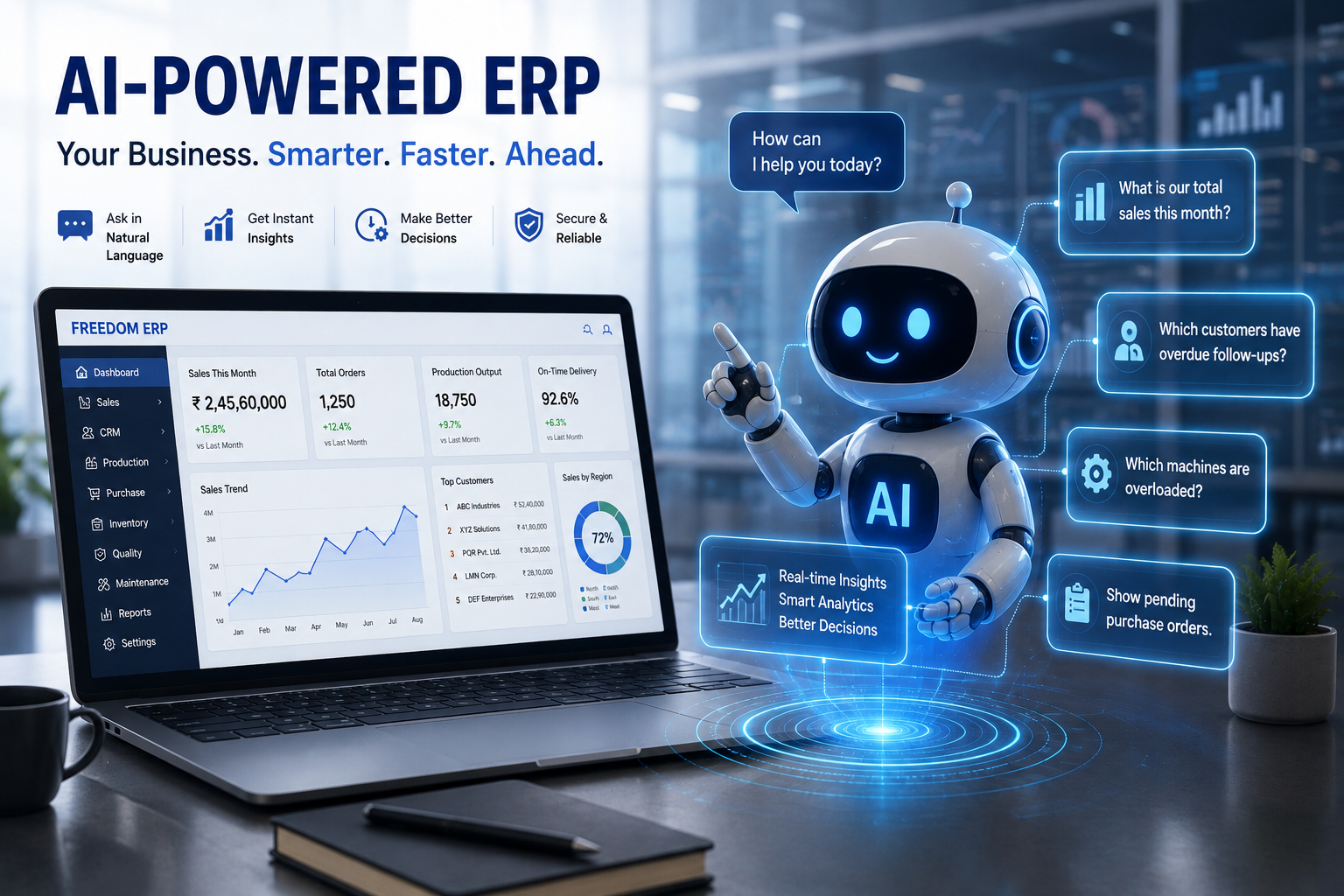
Real-time dashboards and business intelligence reports allow management to monitor KPIs, production efficiency, inventory levels, sales performance, and financial health from a single platform.
Essential Features of ERP for Rubber Manufacturers
Choosing the right ERP solution requires understanding the features that support rubber manufacturing processes.
Production Management
Manage work orders, production schedules, routing, machine allocation, and shop floor activities efficiently.
Material Requirement Planning (MRP)
Automatically calculate material requirements based on production plans and customer demand, reducing shortages and excess inventory.
Inventory & Warehouse Management
Track raw materials, work-in-progress, and finished goods with complete visibility across multiple warehouses.
Quality Management
Maintain product consistency through inspection plans, quality checks, non-conformance management, and corrective action tracking.
Procurement Management
Automate supplier management, purchase orders, vendor evaluation, and material receipts.
Sales & Customer Management
Handle quotations, customer orders, delivery schedules, invoicing, and after-sales support from one integrated platform.
Financial Management
Integrate accounting, budgeting, taxation, cost centers, accounts payable, accounts receivable, and financial reporting seamlessly.
Business Analytics
Interactive dashboards and customized reports provide actionable insights for improving operational performance.
Why Rubber Manufacturers Need Digital Transformation
The manufacturing sector is rapidly adopting Industry 4.0 technologies such as automation, IoT, predictive maintenance, and data analytics. An ERP system acts as the foundation for digital transformation by connecting all departments and ensuring data consistency across the organization.
With ERP for Rubber Manufacturers, businesses can automate repetitive tasks, eliminate manual errors, improve communication between departments, and respond quickly to changing customer demands.
Digital transformation also enables manufacturers to scale operations without increasing administrative complexity.
Choosing the Right ERP Solution
Before selecting an ERP system, manufacturers should evaluate several factors:
Industry-specific manufacturing features
Scalability for future business growth
Easy integration with existing machines and software
User-friendly interface
Cloud or on-premise deployment options
Mobile accessibility
Reliable implementation partner
Training and ongoing technical support
Selecting an ERP designed specifically for manufacturing ensures faster implementation and better return on investment.
Future of ERP in Rubber Manufacturing
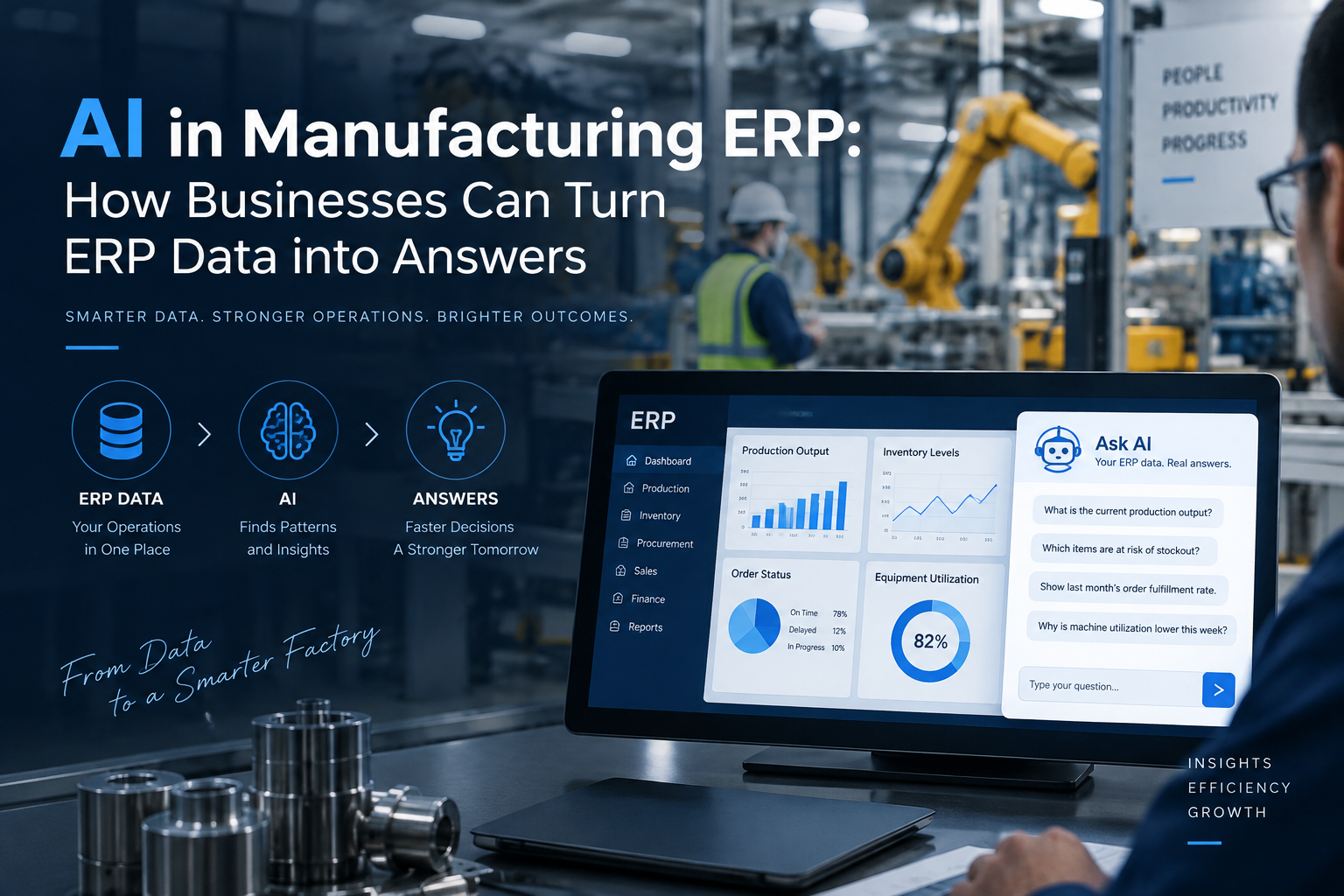
Modern ERP solutions continue to evolve with advanced technologies including Artificial Intelligence (AI), Machine Learning (ML), Internet of Things (IoT), predictive analytics, and cloud computing. These innovations help manufacturers predict machine failures, optimize production schedules, reduce waste, and improve product quality.
Cloud-based ERP systems also enable remote monitoring, faster software updates, improved data security, and lower infrastructure costs.
Manufacturers investing in digital technologies today will be better positioned to compete in an increasingly demanding global marketplace.
Conclusion
Implementing an ERP for Rubber Manufacturers is more than just upgrading software—it is a strategic investment that improves operational efficiency, enhances product quality, and supports long-term business growth. By integrating production, inventory, procurement, finance, sales, and quality management into a single platform, manufacturers gain complete visibility over their operations.
Whether you are a small rubber products manufacturer or a large industrial enterprise, the right ERP for Rubber Manufacturers can help reduce costs, improve productivity, optimize resources, and deliver exceptional customer satisfaction. As the manufacturing industry continues to evolve, adopting a modern ERP solution is the key to building a smarter, more efficient, and future-ready business.