ERP for Sheet Metal Industry: Streamline Manufacturing, Inventory & Production
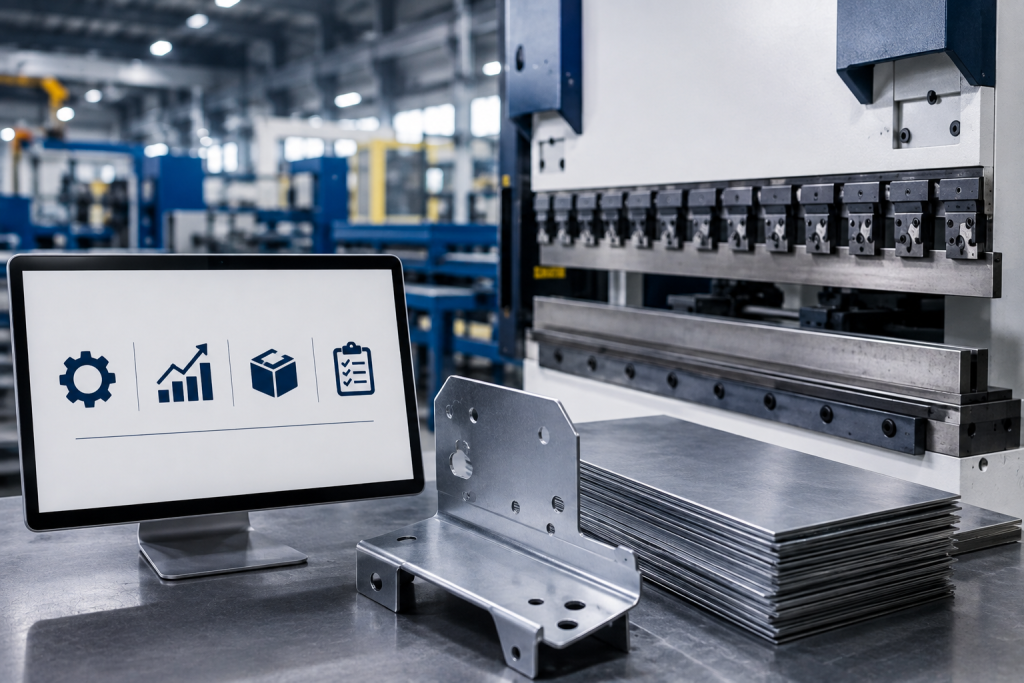
The sheet metal industry involves several complex manufacturing activities, including material procurement, cutting, bending, punching, stamping, fabrication, quality inspection, and dispatch. Managing these operations manually can lead to production delays, excess inventory, material wastage, inaccurate costing, and difficulty tracking orders. This is where ERP for Sheet Metal Industry can make a significant difference.
An industry-focused ERP system integrates production, inventory, purchasing, sales, finance, quality, and shop-floor operations into a centralized platform. It provides manufacturers with better visibility, improves resource utilization, and helps management make faster and more informed decisions.
What Is ERP for Sheet Metal Industry?
ERP for Sheet Metal Industry is an enterprise resource planning solution designed to manage the specific requirements of sheet metal manufacturing businesses. It connects different departments and manufacturing processes through a single integrated system.
A sheet metal manufacturer may need to manage different grades and thicknesses of raw materials, customer-specific designs, multiple production operations, machine capacities, tooling requirements, scrap, rework, and finished products. A specialized ERP system helps organize these activities systematically.
Key areas managed through ERP can include:
Raw material procurement
Inventory management
Bill of Materials (BOM)
Production planning
Machine scheduling
Press shop operations
Cutting and bending
Quality management
Scrap tracking
Job work management
Costing and quotations
Sales and dispatch
Finance and accounting
By connecting these functions, manufacturers can reduce dependency on spreadsheets and disconnected systems.
Why Does the Sheet Metal Industry Need ERP?
Sheet metal manufacturing is highly dependent on accurate material planning and efficient production scheduling. Even a small error in material estimation or production planning can increase costs and affect delivery schedules.
For example, if the required sheet material is not available when a production order is released, production may stop while the purchasing team arranges the material. Similarly, poor machine scheduling can result in idle equipment while other machines become overloaded.
ERP for Sheet Metal Industry provides a centralized view of orders, inventory, production requirements, machines, and delivery commitments. This helps teams coordinate their activities and respond quickly to changing production requirements.
Key Features of ERP for Sheet Metal Manufacturing
1. Material and Inventory Management
Sheet metal manufacturers typically handle multiple material grades, sizes, thicknesses, and specifications. Maintaining accurate stock information is therefore essential.
ERP can track raw materials from receipt to consumption and provide information about available, reserved, issued, and remaining quantities.
Manufacturers can also establish minimum stock levels and generate procurement requirements when inventory falls below defined limits.
2. Production Planning and Scheduling
Production planning is one of the most important functions of an ERP system. It helps manufacturers plan production according to customer orders, material availability, machine capacity, and delivery dates.
An ERP system can provide information about:
Planned production quantities
Pending orders
Machine availability
Material requirements
Production timelines
Work-in-progress
Completed quantities
This makes it easier to prioritize urgent orders and reduce production bottlenecks.
3. Bill of Materials and Routing
Different sheet metal components may require different materials and manufacturing processes. A centralized Bill of Materials helps define the material and components required to manufacture a particular product.
Manufacturing routing can define the sequence of operations, such as:
Cutting → Punching → Bending → Welding → Grinding → Painting → Inspection
ERP can connect the BOM and routing with production orders, making it easier to monitor the manufacturing process from start to finish.
Better Material Utilization and Reduced Scrap
Material cost can represent a significant percentage of total manufacturing costs in the sheet metal industry. Poor nesting, incorrect cutting, rejected components, and production errors can generate substantial scrap.
An ERP system can record planned and actual material consumption and track scrap generated during individual production operations.
This data can help manufacturers identify:
High-scrap production processes
Excessive material consumption
Frequently rejected components
Material losses by machine
Rework requirements
With better visibility into material consumption, companies can take corrective measures to improve material utilization.
Costing and Quotation Management
Accurate costing is essential when preparing quotations for customers. Underestimating material, labor, machine, tooling, or processing costs can reduce profitability.
ERP for Sheet Metal Industry can help manufacturers calculate product costs using information from different departments.
Costing may consider:
Raw material costs
Labor costs
Machine operating costs
Tooling costs
Processing charges
Overheads
Scrap and wastage
Subcontracting costs
This allows businesses to prepare more consistent quotations and understand the expected profitability of individual products or orders.
Press Shop and Machine Management
Many sheet metal manufacturers operate press machines, CNC machines, laser cutting machines, bending machines, punching machines, and other equipment. Efficient machine utilization is important for maintaining productivity.
ERP can help track machine availability, production schedules, downtime, maintenance requirements, and actual production.
A Press Shop ERP System can also help coordinate production orders with available presses, tools, dies, materials, and delivery requirements.
This reduces scheduling conflicts and helps manufacturers utilize their production capacity more effectively.
Quality Management
Quality problems can result in rejection, rework, additional material consumption, and customer complaints. Integrating quality management with production allows manufacturers to identify issues earlier.
ERP can record inspection results against raw materials, production batches, components, and finished goods.
Quality information may include:
Inspection parameters
Accepted quantity
Rejected quantity
Rework quantity
Defect types
Inspection status
Corrective actions
When quality data is connected with production records, managers can identify recurring problems and improve manufacturing processes.
Scrap Management
Scrap cannot always be eliminated in sheet metal manufacturing, but it can be measured and controlled.
A dedicated Scrap Management ERP process can record scrap generated from cutting, punching, stamping, rejected parts, setup operations, and other manufacturing activities.
ERP reports can help management compare planned versus actual scrap and determine where material losses are occurring.
Better scrap visibility can support cost reduction initiatives and improve overall production efficiency.
Benefits of ERP for Sheet Metal Industry
Implementing ERP for Sheet Metal Industry can provide several operational and financial benefits.
Improved Production Visibility
Management can monitor production status, pending orders, work-in-progress, and completed quantities from a centralized system.
Better Inventory Control
Real-time inventory information helps prevent both material shortages and unnecessary stock accumulation.
Reduced Manufacturing Costs
By monitoring material consumption, machine utilization, scrap, and production costs, manufacturers can identify areas for improvement.
Faster Order Fulfillment
Better production planning and coordination can help manufacturers meet customer delivery schedules more consistently.
Improved Decision-Making
ERP dashboards and reports provide management with useful information about production, inventory, sales, purchasing, and profitability.
Reduced Manual Work
Automating repetitive activities reduces dependence on spreadsheets and manual data entry.
Better Traceability
Manufacturers can track materials, production orders, processes, inspections, and finished goods more systematically.
How to Choose the Right ERP for Sheet Metal Industry
Every sheet metal manufacturer has different processes and requirements. Therefore, the ERP should be evaluated according to the company’s actual manufacturing workflow.
Important features to consider include:
Production planning and scheduling
BOM and routing
Material management
Inventory control
Machine capacity planning
Press shop management
Scrap management
Quality control
Costing
Job work management
Purchase management
Sales and order management
Reporting and dashboards
Integration capabilities
Scalability
The system should also be flexible enough to accommodate customized manufacturing processes and future business growth.
Conclusion
Modern sheet metal manufacturers need greater control over materials, production, machines, quality, costs, and customer orders. Managing these activities through spreadsheets and disconnected applications can make it difficult to obtain accurate and timely information.
ERP for Sheet Metal Industry provides an integrated platform that connects manufacturing and business operations. From material procurement and production planning to machine management, quality control, scrap tracking, costing, and dispatch, ERP can help manufacturers create a more organized and efficient workflow.
By adopting the right ERP solution, sheet metal businesses can improve production visibility, optimize material utilization, reduce waste, control costs, and respond more effectively to customer requirements. As manufacturing becomes increasingly data-driven, an industry-focused ERP can become an important foundation for improving productivity, profitability, and long-term business growth.