ERP for Machining Companies: Streamlining Operations for Greater Efficiency and Profitability
Machining companies operate in a demanding manufacturing environment where precision, efficiency, and timely delivery are essential for success. Managing production schedules, machine utilization, inventory, quality control, and customer orders can become increasingly complex as businesses grow. This is why many manufacturers are investing in ERP for Machining Companies to improve operational efficiency and gain a competitive advantage.
An ERP system integrates all critical business functions into a single platform, helping machining businesses streamline workflows, reduce costs, and make data-driven decisions. Whether you specialize in CNC machining, precision engineering, or custom manufacturing, ERP software can transform the way your business operates.
What is ERP for Machining Companies?
ERP for Machining Companies is a specialized enterprise resource planning solution designed to address the unique challenges of machining and precision manufacturing businesses. It connects production planning, inventory management, purchasing, quality control, accounting, and customer management into one centralized system.
Instead of relying on spreadsheets or disconnected software tools, machining companies can use ERP to gain real-time visibility into every aspect of their operations. This improves coordination between departments and enables faster decision-making.
Why Machining Companies Need ERP Software
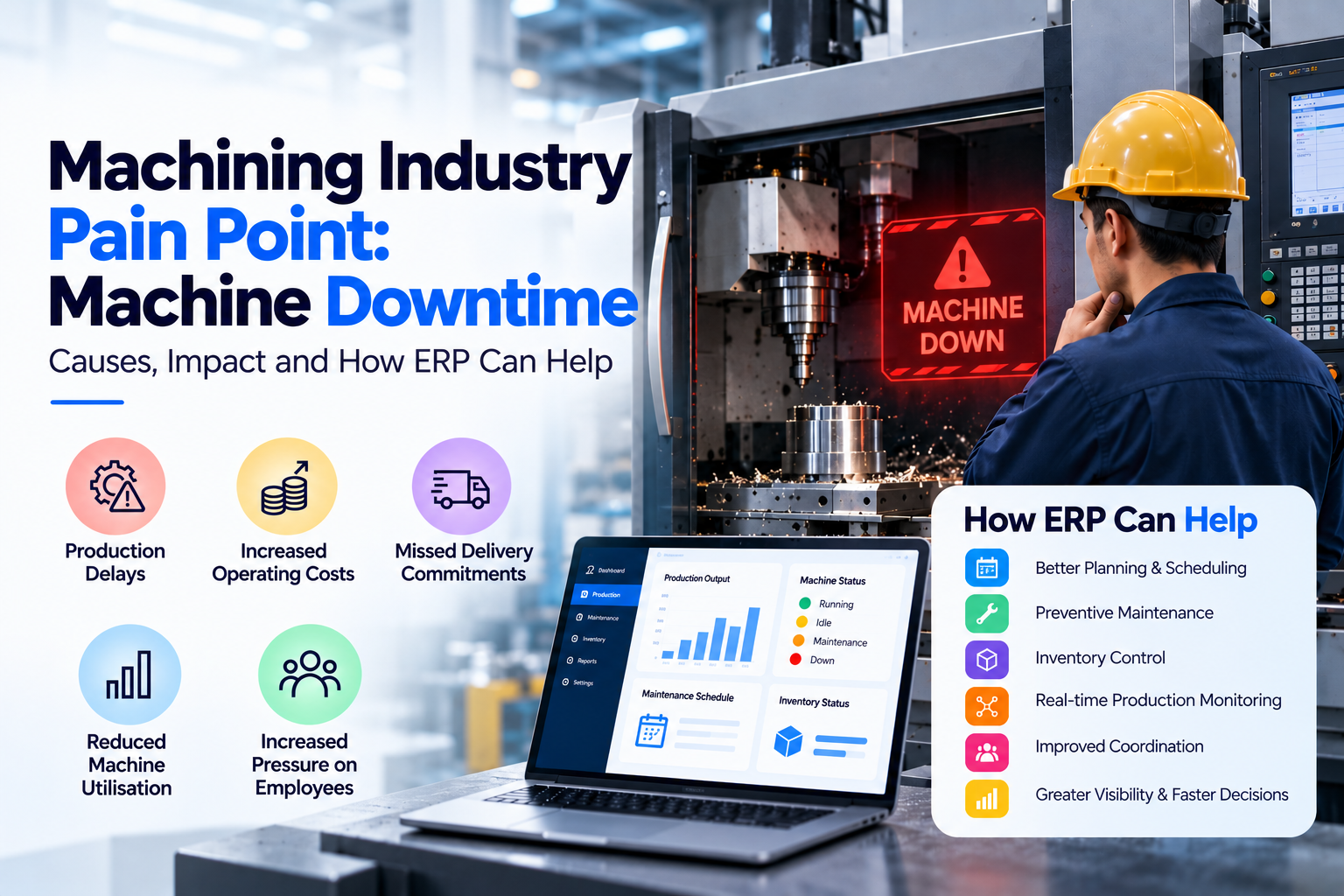
Many machining businesses face challenges such as production delays, inventory shortages, inaccurate job costing, and limited operational visibility. A modern ERP solution helps overcome these issues by providing accurate, real-time information across the organization.
Implementing ERP for Machining Companies can help businesses:
Improve production scheduling
Optimize machine utilization
Track work orders efficiently
Control inventory levels
Improve quality management
Enhance customer service
Increase profitability
These benefits allow manufacturers to operate more efficiently while maintaining high levels of customer satisfaction.
Key Features of ERP for Machining Companies
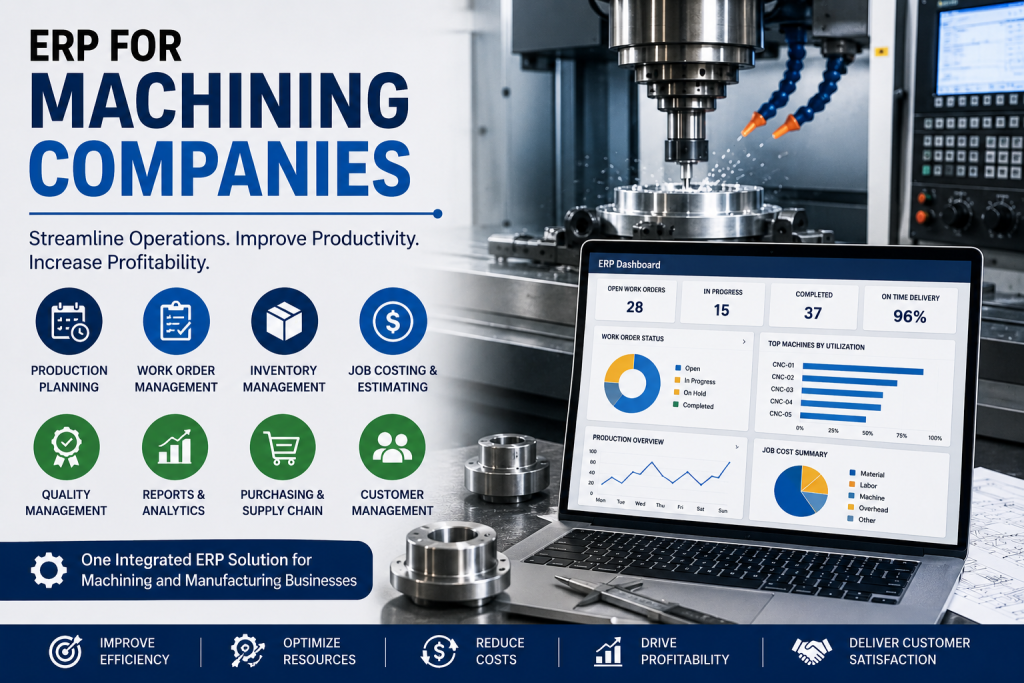
Production Planning and Scheduling
Efficient scheduling is critical for machining operations. ERP software helps manufacturers allocate machines, labor, and materials effectively while ensuring deadlines are met.
Advanced planning tools reduce bottlenecks and maximize production capacity.
Work Order Management
Managing multiple jobs simultaneously can be challenging. ERP for Machining Companies provides complete visibility into work orders, helping managers track progress from quotation to delivery.
Real-time updates ensure better coordination across departments.
Inventory Management
Inventory control plays a major role in machining profitability. ERP software tracks raw materials, tooling, spare parts, work-in-progress inventory, and finished products.
Manufacturers looking to improve inventory visibility and production planning can explore Manufacturing Resource strategies for better operational control.
Job Costing
Accurate job costing helps machining companies understand profitability and improve pricing strategies. ERP systems capture labor costs, machine hours, material consumption, and overhead expenses for each project.
Quality Management
Quality is critical in precision manufacturing. ERP software supports inspections, compliance tracking, corrective actions, and non-conformance reporting.
Reporting and Analytics
Comprehensive dashboards provide real-time insights into production performance, inventory levels, machine utilization, and financial metrics.
Benefits of ERP for Machining Companies
Improved Productivity
Automation reduces manual administrative work, allowing employees to focus on value-added activities.
Better Machine Utilization
ERP software helps optimize machine scheduling and capacity planning, reducing idle time and increasing throughput.
Enhanced Inventory Control
Real-time inventory tracking minimizes stock shortages and prevents overstocking.
Faster Decision-Making
Managers can access real-time business information, enabling faster and more informed decisions.
Increased Customer Satisfaction
Accurate production tracking and order management improve delivery performance and customer communication.
Companies implementing ERP for Manufacturing Industry solutions often experience improved scheduling, inventory accuracy, and productivity.
Common Challenges Solved by ERP
Production Delays
Manual scheduling often leads to bottlenecks and missed deadlines. ERP for Machining Companies helps optimize workflows and improve on-time delivery rates.
Inventory Shortages
ERP systems provide complete inventory visibility, helping businesses avoid material shortages that can disrupt production.
Costing Errors
Without accurate tracking, machining companies may underestimate production costs. ERP software captures detailed cost information for every job.
Limited Visibility
Disconnected systems make it difficult to monitor operations. ERP provides a centralized platform for managing production, purchasing, inventory, and finance.
Quality Issues
Integrated quality management tools help manufacturers identify defects early and maintain consistent product standards.
Industries That Benefit from ERP Solutions
ERP software is widely used across various machining and manufacturing sectors, including:
CNC machining companies
Precision engineering firms
Aerospace component manufacturers
Automotive parts manufacturers
Tool and die makers
Industrial equipment manufacturers
Metal fabrication companies
Contract manufacturing businesses
These industries require precise planning, accurate costing, and efficient resource management to remain competitive.
Choosing the Right ERP for Machining Companies
Selecting the right ERP solution is critical for long-term success.
Industry-Specific Functionality
Choose software designed specifically for machining and manufacturing operations.
Scalability
The ERP system should support future growth and increasing production demands.
Integration Capabilities
Look for software that integrates with CAD/CAM systems, accounting software, and machine monitoring tools.
Ease of Use
A user-friendly interface encourages employee adoption and reduces training time.
Vendor Support
Reliable implementation, training, and technical support are essential for a successful ERP deployment.
Future Trends in Manufacturing ERP
The future of ERP for Machining Companies is being driven by emerging technologies such as:
Artificial Intelligence (AI)
Industrial Internet of Things (IIoT)
Cloud ERP Solutions
Predictive Maintenance
Machine Learning
Advanced Analytics
These innovations help manufacturers improve efficiency, reduce downtime, and gain deeper operational insights.
Conclusion
ERP for Machining Companies has become an essential investment for manufacturers seeking greater efficiency, productivity, and profitability. By integrating production planning, inventory management, scheduling, quality control, and financial operations into a single platform, ERP software enables machining businesses to streamline processes and make smarter decisions.
As customer demands continue to grow and competition intensifies, companies that implement ERP for Machining Companies will be better positioned to reduce costs, improve performance, and achieve long-term success in the manufacturing industry.